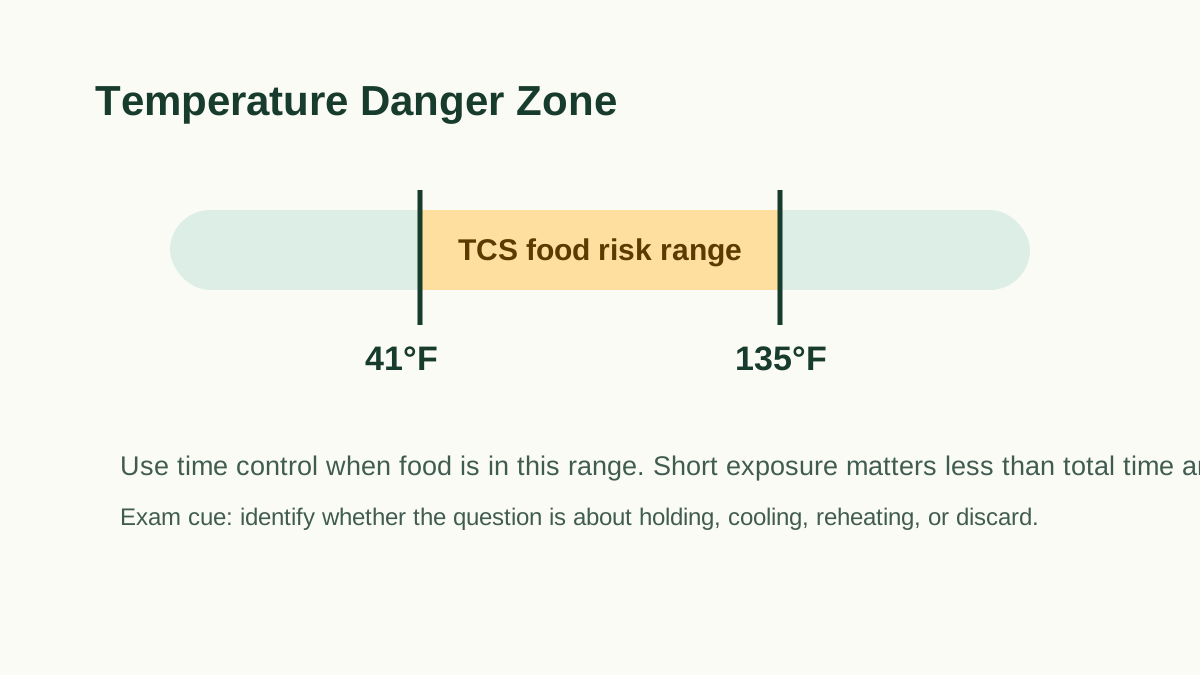
For exam prep, danger-zone questions usually test whether TCS food stayed between 41°F and 135°F too long, or whether it is moving through that range under a valid cooling, reheating, or time-control process.
Do not answer only from the number. Identify the task first.
Practice prompts
For each prompt, decide whether the food should be kept, reheated, cooled, corrected, or discarded.
A pan of soup cools from 135°F to 80°F in 2 hours. What checkpoint was missed?
Chicken salad is displayed at 52°F on a buffet. What holding rule is being tested?
Chili is reheated for hot holding. Which temperature task comes before hot holding?
A delivery of cold TCS food arrives at 50°F. Is this a cooking, receiving, or holding decision?
Food was left in a hot car for 2 hours. Which time rule applies?
Common mistake
Learners often memorize 41°F and 135°F but miss whether the food was being cooled correctly, held incorrectly, or left out with unknown history.
FAQ
Quick answers
What should I practice after danger zone questions?
Practice cooling, reheating, hot holding, cold holding, receiving, and food-left-out questions because they all use danger-zone logic.
Is every danger-zone temperature an automatic discard?
No. Food may be passing through the danger zone during proper cooling or reheating. The time and task matter.
What is the most common trap?
Choosing a temperature number before identifying the task named in the scenario.
Sources checked
Review basis
This page was last reviewed on July 5, 2026. It is written for exam practice and practical food safety learning, not legal compliance. Food rules and certification details can vary by jurisdiction, provider, and current official materials.
We check high-risk statements such as temperatures, time limits, discard decisions, hygiene, allergens, cleaning, sanitizing, cooling, and reheating against public references where available. If a sentence looks outdated or too broad, send the page URL and source to the contact page.