Independent food safety manager exam prep editors
Direct answer
For a safe Fourth of July BBQ, keep raw and ready-to-eat foods separate, cook meat and poultry with a food thermometer, hold cold food cold, hold hot food hot, and refrigerate or discard leftovers on time.
The heat rule is the detail many people miss: perishable food should not sit out more than 2 hours, and the limit drops to 1 hour when the outdoor temperature is above 90°F. If time or temperature cannot be verified, the safer manager decision is to discard the food.
BBQ setup that prevents the common failures
Most holiday food safety problems start before the first burger hits the grill. A good setup separates raw animal foods, keeps cold food truly cold, and makes discard times visible before guests start grazing.
- Use separate platters, tongs, and cutting boards for raw meat and cooked or ready-to-eat food.
- Pack raw meat, poultry, and seafood securely so juices cannot leak onto fruit, salad, buns, desserts, or cooked food.
- Use separate coolers for drinks and perishable food so the food cooler is opened less often.
- Pack cold foods cold; a cooler is for holding temperature, not for rescuing warm food.
- Keep a thermometer at the grill and another way to verify cooler or holding temperatures.
- Label discard times for foods that will sit on a buffet, picnic table, or outdoor counter.
Temperature decisions at the grill
Holiday cooking questions often mix up whole cuts, ground meat, and poultry. The food type matters because grinding, stuffing, and reheating change the risk pattern. Color is not a reliable safety test.
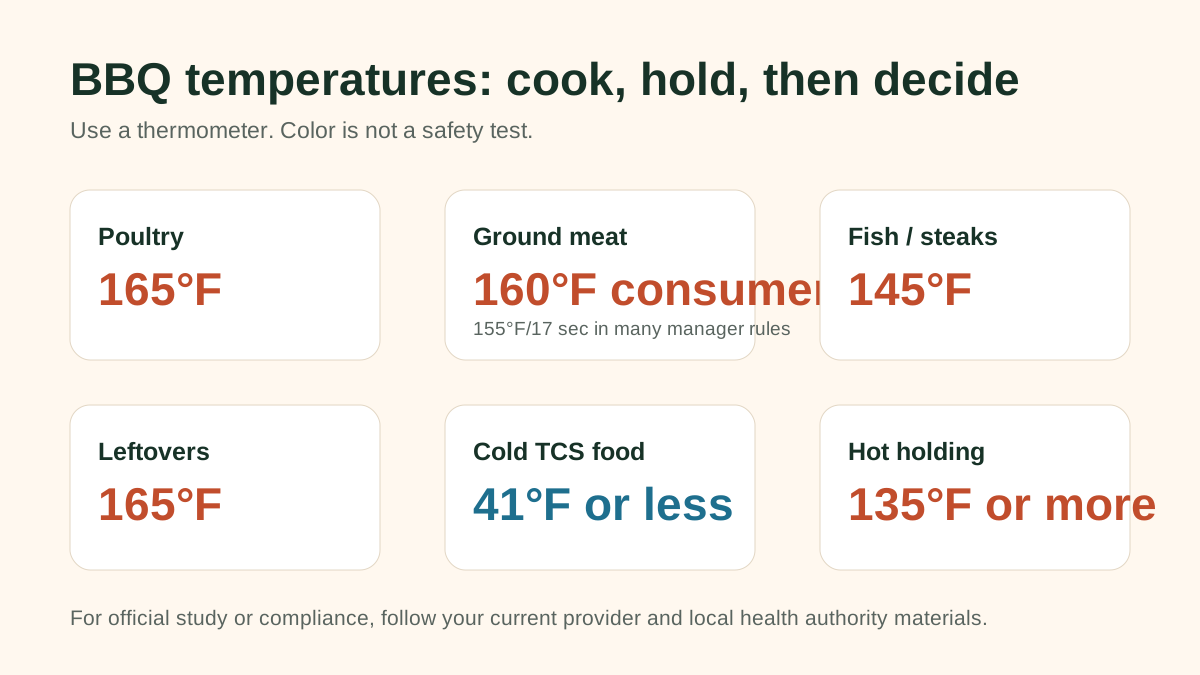
- Poultry: cook to 165°F.
- Ground meat: public consumer guidance commonly lists 160°F; ServSafe Manager-style study often tests 155°F for 17 seconds under FDA Food Code-style rules.
- Steaks, chops, roasts, and fish: commonly reviewed at 145°F, with rest time required for some whole cuts.
- Leftovers and casseroles: reheat to 165°F when reheating for safety.
- If a local policy, training provider, or exam material gives a specific time-temperature pair, follow that source for official study or compliance decisions.
What to throw away after a hot outdoor meal
Leftovers are not automatically safe because the food was cooked correctly. Time, temperature, and contamination after cooking still matter. The safest answer is usually based on what can be verified, not whether the food still looks fine.
- Discard perishable food left out longer than 2 hours, or longer than 1 hour above 90°F.
- Discard cooked food placed back on a platter or cutting board that held raw meat, poultry, or seafood unless the surface was properly washed first.
- Discard cut melon, deli salads, cooked rice, cooked beans, dairy desserts, and other TCS foods when time-temperature control was lost.
- Do not save food because it smells normal. Smell does not prove safety.
- Do not mix questionable leftovers into a fresh batch.
- Divide safe leftovers into shallow containers so they cool faster in the refrigerator.
Cooler and buffet manager checklist
For a restaurant, food truck, catered event, or large family cookout, treat the holiday setup like a small temporary service line. Someone should be responsible for time, temperature, and separation.
- Cold TCS food: verify it stays cold instead of assuming the cooler is working.
- Hot TCS food: use a grill, warmer, or other hot-holding method instead of leaving food in the sun.
- Raw-to-ready separation: keep raw meat tools away from buns, cooked burgers, salads, and fruit.
- Utensils: replace dropped, dirty, or raw-contaminated utensils immediately.
- Hands: provide soap and running water when possible, or a workable hand-cleaning setup for outdoor prep.
- Allergens: do not guess about marinades, buns, sauces, desserts, sesame, dairy, eggs, wheat, soy, fish, shellfish, peanuts, or tree nuts.
Practice scenarios
Use these to connect holiday situations to exam rules. Each one should lead to a manager action, not just a memorized number.
- A cooked burger is placed back on the raw-meat tray. What contamination problem occurred?
- Chicken looks done but measures 158°F. What should happen before service?
- Cut melon sits outside in 95°F weather for 75 minutes. What should the manager do?
- A guest reports a sesame allergy and asks about burger buns and sauces. What should staff avoid doing?
- A cooler has plenty of ice but has been opened every few minutes for drinks. What should the manager verify before serving the food?