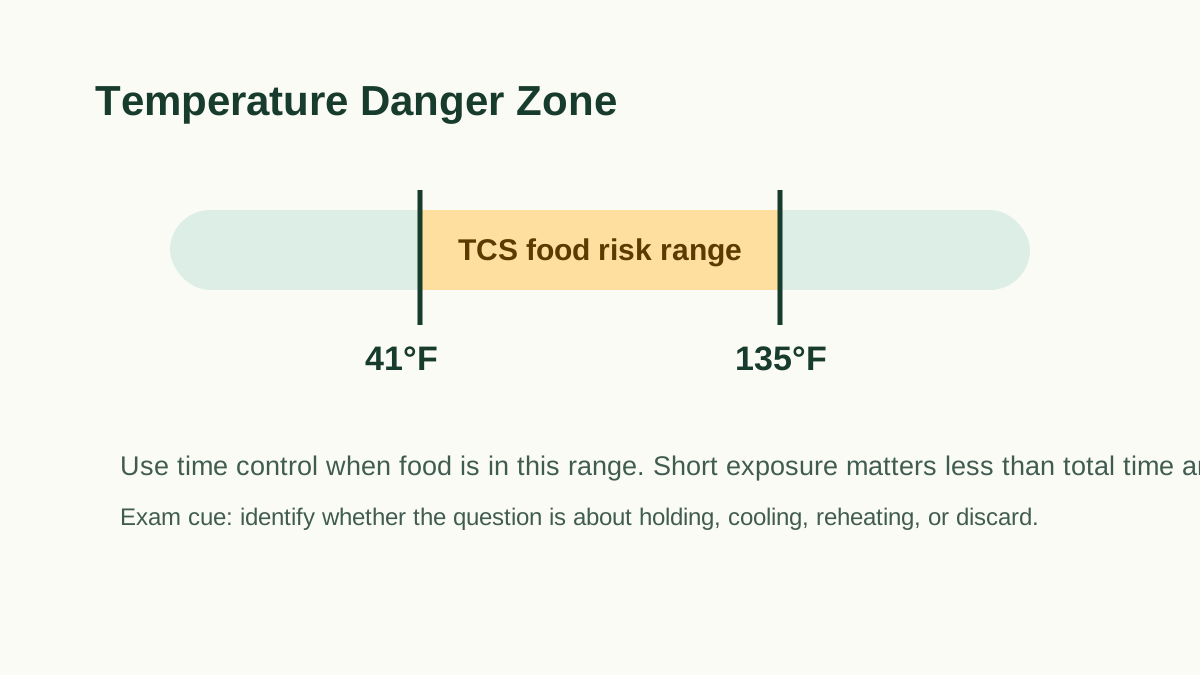
For food safety manager study, the temperature danger zone is commonly taught as 41°F to 135°F. TCS food should not remain in that range beyond allowed time limits.
The practical exam move is to identify whether the question is about cold holding, hot holding, cooling, reheating, or time as a public health control.
What this means in real decisions
A food at 70°F is not automatically unsafe at the first moment it reaches that temperature. The risk depends on what the food is, how long it has been there, and whether it is being cooled under the required process.
A cold salad at 55°F on a buffet, soup cooling from 135°F to 70°F, and chili reheating for hot holding are three different questions even though all involve danger-zone temperatures.
Cold holding target: 41°F or lower.
Hot holding target: 135°F or higher.
Cooling checkpoint: 135°F to 70°F within 2 hours.
Final cooling target: 70°F to 41°F or lower within 4 more hours.
Unknown time or unsafe history usually points toward discard.
Exam trap
Do not answer only from the number. A question may include 165°F, 135°F, or 41°F as distractors. First identify the task, then choose the rule.
FAQ
Quick answers
Is the danger zone 40°F to 140°F or 41°F to 135°F?
Different public education materials may use different simplified ranges. For ServSafe Manager-style study, 41°F to 135°F is the common exam-prep range.
Can food be in the danger zone while cooling?
Yes, but cooling must follow the required time limits. The common rule is 135°F to 70°F within 2 hours, then 70°F to 41°F or lower within 4 more hours.
What foods need danger-zone control?
TCS foods need time and temperature control, including many cooked foods, meat, poultry, seafood, dairy, eggs, cooked rice, cooked beans, cut melons, and cut leafy greens.
Sources checked
Review basis
This page was last reviewed on July 1, 2026. It is written for exam practice and practical food safety learning, not legal compliance. Food rules and certification details can vary by jurisdiction, provider, and current official materials.
We check high-risk statements such as temperatures, time limits, discard decisions, hygiene, allergens, cleaning, sanitizing, cooling, and reheating against public references where available. If a sentence looks outdated or too broad, send the page URL and source to the contact page.