Independent food safety manager exam prep editors
Direct answer
TCS foods are foods that need time and temperature control for safety because they can support pathogen growth or toxin formation when they stay too long in unsafe conditions.
For exam practice, do not only memorize a list. Learn the pattern: many TCS foods are moist, carbohydrate-rich or protein-rich, and not controlled by acidity or other barriers.
Common TCS foods
Exam questions often hide TCS decisions inside receiving, storage, prep, cooling, reheating, and service scenarios.
- Animal foods: meat, poultry, seafood, eggs, and dairy.
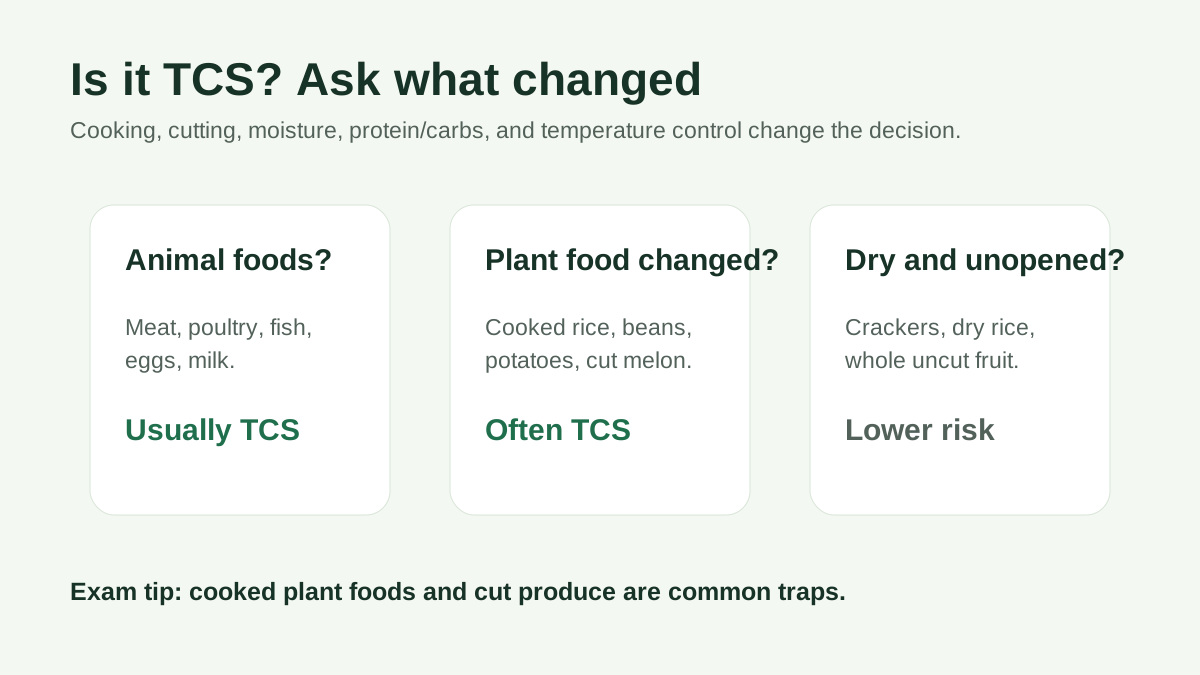
- Cooked plant foods: cooked rice, beans, potatoes, pasta, and cooked vegetables.
- Cut produce often tested as TCS: cut melons, cut tomatoes, and cut leafy greens.
- Other common examples: sprouts, tofu, soy protein foods, and untreated garlic-oil mixtures.
How to judge a food you did not memorize
Ask whether the food has enough moisture and nutrients to support pathogen growth, and whether it lacks another safety barrier such as strong acidity or commercial processing.
Then ask what control the manager needs: temperature control, time control, date marking, cooling, reheating, or discard.
Exam-style examples
Cooked rice is a classic TCS example because cooking removes competition and the food can support growth if time and temperature are abused.
Whole uncut fruit is usually lower risk than cut melon or cut leafy greens, because cutting changes the food surface and handling risk.
Dry crackers are not handled the same way as cooked beans, even though both contain carbohydrates, because moisture and support for growth matter.
Common traps
The exam may not ask, 'Is this TCS?' directly. It may ask whether to cold hold, date mark, cool quickly, reject a delivery, or discard food left out too long.
- Forgetting that cooked plant foods can be TCS.
- Treating all produce the same after it has been cut.
- Thinking only animal foods need temperature control.
- Ignoring time because the food still looks and smells normal.