Independent food safety manager exam prep editors
Direct answer
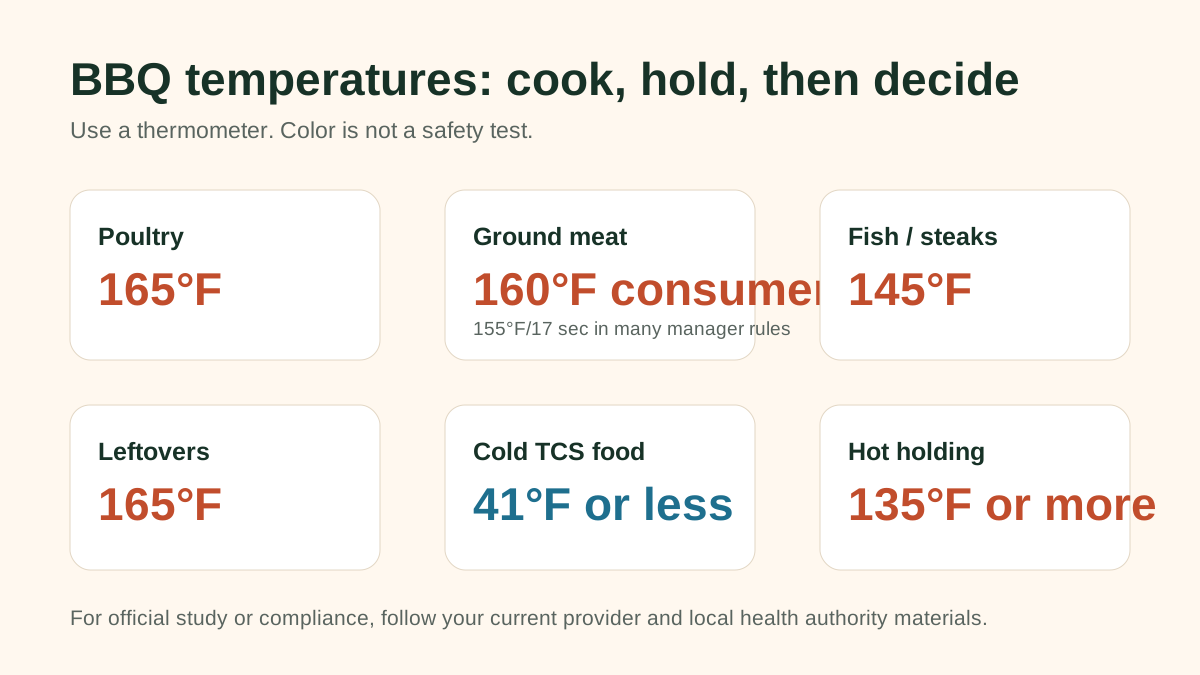
For BBQ food safety, cook poultry to 165°F, use a thermometer for burgers and other ground meat, cook fish and many whole cuts to 145°F, keep cold TCS food cold, keep hot food hot, and refrigerate or discard leftovers on time.
For ServSafe Manager review, remember that consumer charts and manager exam wording may not always use the same numbers. Public consumer guidance commonly lists 160°F for ground meat, while manager exam prep often tests FDA Food Code-style rules such as 155°F for 17 seconds for ground meat. Always follow your official training material for exam-specific numbers.
The BBQ temperature chart that matters
Do not use color, grill marks, or juices as a safety test. A burger can brown before it is safely cooked, and chicken can look done before it reaches the temperature needed for safety.
- Poultry: 165°F.
- Ground meat: 160°F in common consumer guidance; 155°F for 17 seconds in many manager exam rules.
- Fish, steaks, chops, and eggs for immediate service: commonly reviewed at 145°F.
- Leftovers and casseroles: 165°F when reheating for safety.
- Cold TCS food in manager review: 41°F or lower.
- Hot holding in manager review: 135°F or higher.
Where BBQ questions usually go wrong
Most unsafe BBQ decisions happen after the cooking step. A perfectly cooked burger can become unsafe if it is placed back on the raw-meat plate, held too long, or served with contaminated utensils.
- A cooked food on a raw-meat platter is a cross-contamination problem.
- A cooler full of drinks and meat is risky if raw meat leaks or the cooler is opened all day.
- A grill thermometer does not replace a food thermometer.
- A hot plate sitting on a picnic table still needs time control.
- A guest with an allergy needs ingredient verification, not a guess from the grill station.
Manager action checklist
Use this sequence for BBQ scenarios on a real shift or on an exam-style question.
- Identify the food and its required cooking temperature.
- Verify with a clean, calibrated food thermometer.
- Use clean utensils and a clean platter after cooking.
- Hold hot foods hot and cold foods cold.
- Start the 2-hour or 1-hour clock when food leaves temperature control.
- Discard food when time, temperature, or contamination history cannot be verified.
Practice scenarios
Turn each BBQ problem into the rule being tested.
- Chicken reaches 158°F and the cook wants to serve it because the juices run clear. The correct action is to keep cooking and verify temperature.
- A burger reaches the right temperature, then goes onto the raw patty tray. The cooking step was not the problem; post-cooking contamination was.
- A pan of cooked sausages sits outside above 90°F for 90 minutes. The hot-weather time limit has been exceeded.
- A cooler has raw burger patties above a container of cut fruit. The storage problem exists before service starts.