Independent food safety manager exam prep editors
Direct answer
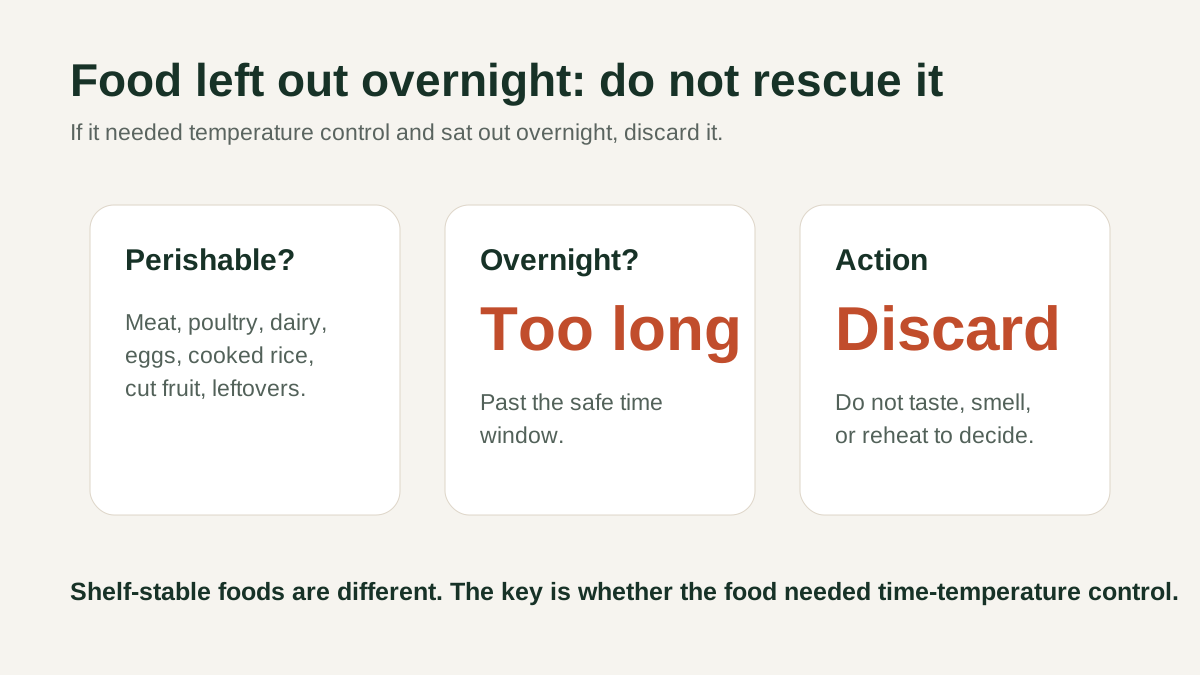
Perishable food left out overnight should be discarded. That includes meat, poultry, seafood, eggs, dairy foods, cooked rice, cooked pasta, cooked potatoes, cut fruit, deli salads, and most leftovers.
The usual public food safety window is much shorter than overnight: perishable food should generally not sit out more than 2 hours, or more than 1 hour when the temperature is above 90°F. Overnight is beyond those limits.
The 2-hour rule includes serving time
For household and picnic guidance, refrigerate perishables within 2 hours, or within 1 hour when exposed to temperatures above 90°F. Count preparation, transport, and serving time without safe hot or cold control. Refrigerating again does not erase earlier exposure.
If the limit has been exceeded—or you cannot establish a safe time-temperature history—discard the perishable food. Reheating is not a reliable rescue step.
- Room-temperature party: the usual consumer limit is 2 hours.
- Hot car or picnic above 90°F: use the 1-hour limit.
- Overnight on the counter: discard perishables, even if they smell normal.
Foods that should not be saved
If the food needed refrigeration or hot holding before it was left out, treat overnight holding as unsafe unless a verified food safety control was in place.
- Cooked chicken, burgers, ribs, seafood, eggs, and casseroles.
- Milk, yogurt, cream desserts, soft cheeses, and dairy dips.
- Cut melon, cut tomatoes, fruit salad, and leafy salads.
- Potato salad, pasta salad, egg salad, tuna salad, and chicken salad.
- Cooked rice, cooked beans, cooked pasta, cooked potatoes, and leftovers.
What may be different
Not every food on a counter is the same risk. Shelf-stable foods are different from TCS or perishable foods.
- Unopened shelf-stable cans and dry pantry foods are usually lower risk.
- Whole uncut fruit is different from cut fruit.
- Bread, crackers, chips, and many dry baked goods are not the same as meat, dairy, eggs, or cooked starches.
- If packaging is damaged, contaminated, swollen, leaking, or uncertain, discard it.
Do not use these rescue tests
Most unsafe decisions happen because the food looks or smells fine. That is not enough.
- Do not taste the food to check safety.
- Do not rely on smell, color, or texture.
- Do not reheat overnight food as a rescue step.
- Do not put it back in the refrigerator for later.
- Do not mix it into a fresh batch.
ServSafe Manager takeaway
An overnight food question is testing time-temperature control, TCS food identification, corrective action, and active managerial control.
Consumer 2-hour/1-hour advice differs from the FDA foodservice procedure for using time as a public health control. The foodservice procedure requires specified starting temperatures, written procedures, marking, monitoring, and discard controls. It is not permission to save food accidentally left out overnight.
- Identify whether the food is TCS or perishable.
- Compare the time out of control with the safe time window.
- Discard when safe history cannot be verified.
- Prevent recurrence with logs, labels, closing checks, and staff training.