Reviewed 2026-07-24; official references are listed below.
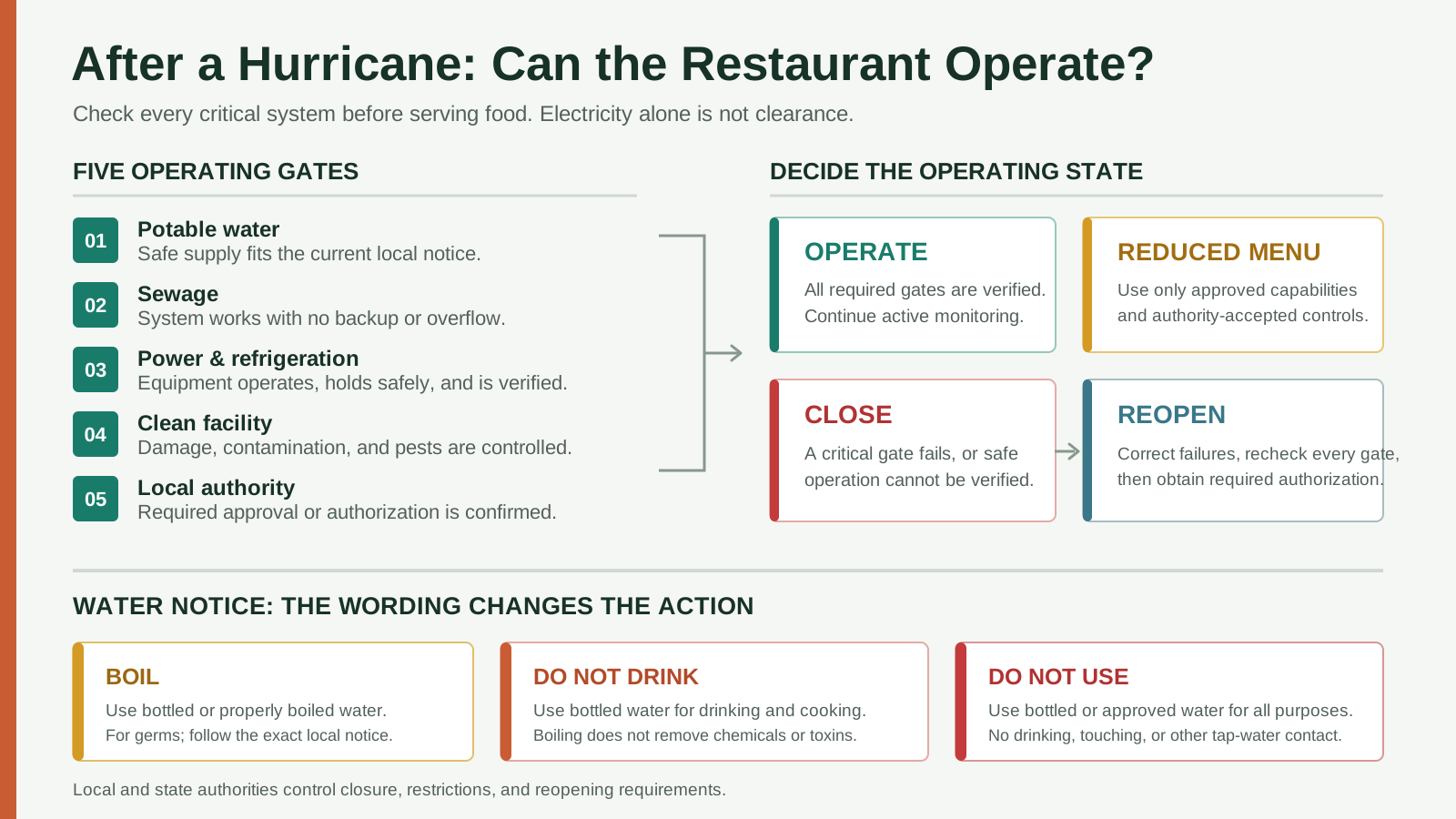
Direct answer
Continue normal service only when potable water and sewage work, food has not been contaminated by floodwater, required equipment works, safe inventory and enough trained staff are available, and no closure or evacuation order applies.
Reduce the menu only for controllable staffing or equipment limits while safe water, handwashing, warewashing, temperature control, and unaffected work areas remain available. Stop when flooding, sewage backup, unsafe water, utility failure, contamination, damage, or uncertainty creates an imminent health hazard.
If closure was required, correct the hazard, remove unsafe inventory, verify the facility and utilities, prepare the staff, document corrective action, and obtain regulatory authorization to reopen when required. Electricity returning does not resolve water, sewage, flood exposure, temperature history, or a closure order.
This is educational exam preparation and an operations planning aid, not medical advice, legal advice, or regulatory approval. The FDA Food Code is a model that jurisdictions may modify. In a restaurant, follow local code, emergency orders, utility notices, and the regulatory authority.
NOAA's seasonal Atlantic outlook is not a local landfall forecast. One storm can cause a disaster, so use current forecasts and local instructions rather than treating the seasonal outlook as a prediction for one location.
Stay open, reduce service, close, or reopen
A person in charge should make the operating decision from observable controls, not from pressure to preserve sales or inventory. Record the basis for the decision and keep monitoring advisories as conditions change.
Reduced service is not a workaround for an extended water or electrical interruption. Under model Food Code section 8-404.11, continued operation in that situation requires regulatory agreement, an approved written emergency plan, immediate risk controls, and notice to the authority. If operations stop, section 8-404.12 requires regulatory approval before resumption. Local adoption controls.
- Continue normal service: confirm potable water, sewage, unaffected food, required equipment, safe inventory, trained staffing, and the absence of a closure order. Record the check and keep the emergency plan active.
- Operate a reduced menu: remove items that require unavailable equipment or excess labor. Consider bottled drinks, commercial ice, single-use articles, and simpler foods only when all remaining operations can be performed safely and the authority permits service.
- Stop operations: a closure or evacuation order, sewage backup, inadequate potable water, floodwater in food areas, extended utility interruption, contamination, or inability to verify safety requires stopping the affected operation and notifying the authority as required.
- Reopen: correct the hazard, remove unsafe inventory, verify the building, utilities, and equipment, prepare staff, complete a PIC self-inspection, retain corrective-action records, and obtain authorization when required.
Before the storm: manager checklist
Name the acting PIC and write the decision points for normal, reduced, stopped, and resumed service before severe weather disrupts utilities, staffing, deliveries, and communications.
Use the site's Power Outage Food Safety Checklist for refrigerator and freezer timelines and detailed discard decisions. Its consumer 40°F and four-hour guidance is not restaurant reopening authorization. A PIC needs temperature history and must follow local code, an approved emergency plan, and regulator direction.
- List utility, contractor, supplier, company food-safety, and regulatory contacts.
- Confirm whether the jurisdiction accepts an emergency operating plan and what prior or event-specific approval it requires.
- Protect approved water, single-use items, chemicals, records, and shelf-stable food above the expected flood level.
- Verify thermometers, sanitizer test supplies, coolers, and approved backup water and ice.
- Preselect a reduced menu that does not depend on compromised equipment or complex cooling.
- Prepare logs for inventory, temperatures, advisories, disposal, repairs, contacts, and regulator decisions.
Potable water is a go or no-go control
Safe water is needed for drinks, ice, food preparation, produce washing, handwashing, warewashing, and plumbed appliances. During a boil-water advisory, CDC says to stop water-connected equipment, including post-mix beverage, coffee and tea, hot-water, and ice machines. Discard affected ice, use commercially manufactured ice, and do not serve items made with untreated water.
Treat boil-water instructions as a control for microbial contamination only. Boiling kills germs but cannot remove chemicals, toxins, fuel, or radioactive contaminants. A do-not-drink advisory generally requires commercial bottled water for drinking, cooking, food preparation, produce washing, and ice because ingestion is hazardous.
A do-not-use advisory means no tap-water use for any purpose because swallowing, skin, lung, or eye contact may be dangerous. Follow the exact notice rather than applying boil-water steps to a chemical or radiological hazard.
For a microbial boil-water advisory, CDC allows bottled, properly boiled or distilled water, approved hauled water, or a licensed drinking-water hauler. Its commercial guidance calls for a rolling boil for one minute, or three minutes above 6,562 feet. Hand sanitizer does not replace handwashing; use soap and an approved safe-water alternative.
Sewage backup is a stop signal
A sewage backup is a stop signal for the affected area, not a service-time workaround. The model Food Code identifies sewage backup, flooding, and an extended interruption of water or electricity as emergencies that may create an imminent health hazard.
Keep employees and customers out of the affected area, prevent cross-contamination, stop food handling that cannot be protected, and contact the regulatory authority and qualified cleanup professionals. Verify drains and sewage systems before returning sinks, equipment, or food areas to service.
Floodwater: discard first, salvage only by rule
Discard refrigerated or frozen food submerged in floodwater and food in packaging that is not waterproof. Nonwaterproof examples include paper, cardboard, cloth, and containers with screw-caps, snap-lids, pull-tops, crimp-caps, or similar closures. Ordinary plastic bags or containers are not automatically waterproof.
Also discard swollen, leaking, punctured, deeply rusted, or severely dented cans. The narrow packaging exception is undamaged, commercially prepared food in waterproof all-metal cans or retort pouches. A retort pouch is not the same as ordinary plastic packaging.
Separate possible salvage from usable inventory and confirm that the authority permits the official reconditioning process before returning anything to inventory. Do not enter a flood-damaged building with possible gas leaks or hazardous materials until the appropriate safety team clears it.
After a boil-water advisory is lifted
Do not immediately make drinks or ice. Follow utility, regulatory-authority, and manufacturer instructions. The procedure after a boil-water advisory is lifted is not automatically the same as the more extensive recovery procedure after hurricane flooding.
- Flush, clean, and sanitize water-connected appliances as directed.
- Replace point-of-entry, point-of-use, ice-machine, and beverage-dispenser filters.
- Run cold-water faucets and drinking fountains continuously for at least five minutes unless local or manufacturer instructions require another procedure.
- Return equipment to service only after required sanitation, flushing, filter replacement, and verification are complete.
After hurricane or flood recovery
Use the separate FDA flood-recovery procedure rather than substituting the five-minute boil-water procedure. Flood exposure can affect water lines, ice equipment, warewashing, drains, building surfaces, and food inventory at the same time.
- Replace ice-machine and beverage-dispenser filters and flush water lines, including steam and ice-machine lines, for 10 to 15 minutes.
- Discard all ice, clean and sanitize the machine and bin, run three ice-making cycles, and discard the ice from each cycle.
- Run an empty dishwasher through three complete wash-rinse-sanitize cycles, then verify sanitizer concentration or final-rinse performance.
- Confirm sinks, floor drains, and sewage systems drain normally before use.
- Verify refrigeration, hot holding, warewashing, sanitizer systems, and calibrated temperature checks before receiving replacement inventory.
Reopening sign-off
Complete a PIC self-inspection before requesting or recording approval. Keep the supporting logs, photos, service records, disposal records, advisories, and regulator communication with the incident file.
- Check evacuation, drinking-water, utility, and closure orders.
- Confirm potable water and approved ice are available for every planned task.
- Confirm sewage and drains work without backup and that flood-damaged areas are cleared for entry.
- Segregate and discard flood-exposed food and packaging; retain authority and records for any officially reconditioned inventory.
- Clean and sanitize food-contact surfaces and equipment, flush water lines, and replace required filters.
- Complete ice-machine, beverage-machine, and dishwasher recovery procedures and verify their performance.
- Confirm refrigeration holds TCS food at 41°F or below and calibrate temperature-control equipment.
- Confirm approved suppliers can deliver intact food at safe receiving temperatures.
- Schedule enough trained employees for the menu offered and brief them on the operating limits.
- Document the self-inspection, corrective actions, supporting records, and required regulatory authorization.
Exam rule versus restaurant rule
On a manager exam, identify the hazard, stop exposure, notify the proper person, correct the cause, verify the control, and reopen only when allowed. The best answer protects the public rather than trying to save questionable inventory or resume service too early.
In practice, local rules may require earlier closure, an approved emergency plan, inspection, test results, service records, or written authorization. Confirm current requirements with the local or state regulatory authority.