Independent food safety manager exam prep editors
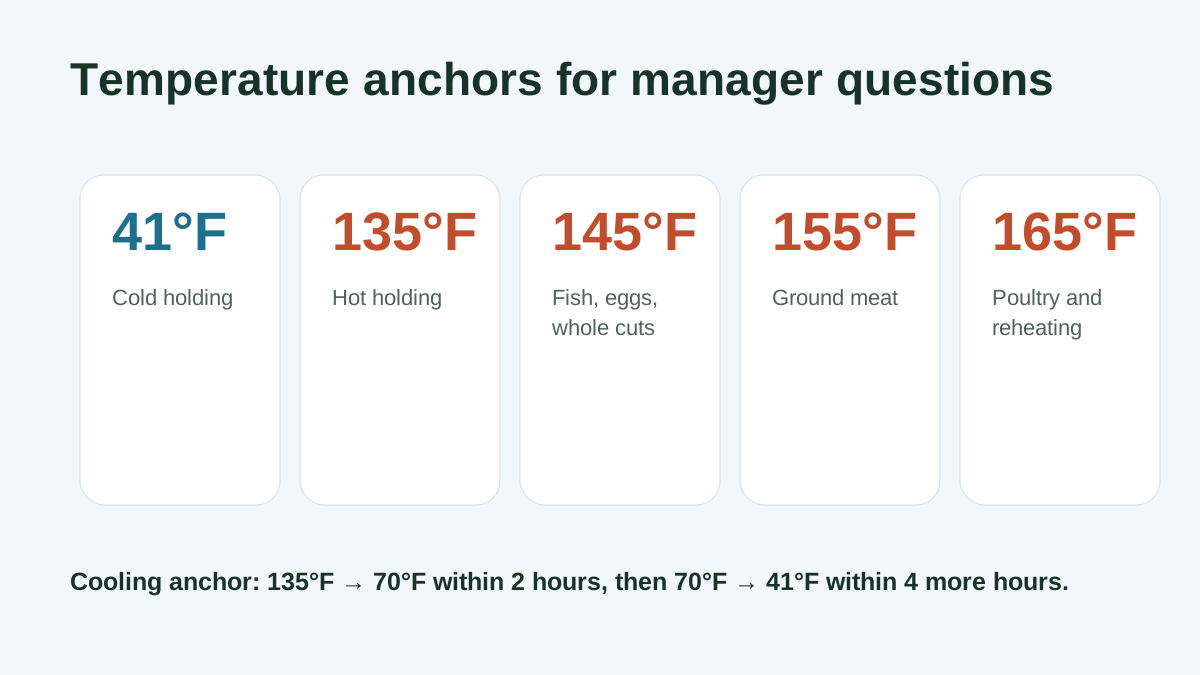
Core foodservice chart
FDA Food Code 2022 and 2026 distinguish conventional poultry cooking from reheating for hot holding. Do not attach the same holding time to every 165°F answer.
| Task or food | Temperature and time |
|---|---|
| Cold holding of TCS food | 41°F or lower |
| Hot holding of TCS food | 135°F or higher |
| Fish, whole cuts of meat, and raw eggs prepared for immediate service | 145°F for 15 seconds |
| Ground/non-intact meat and raw eggs not prepared for immediate service | 155°F for 17 seconds; listed equivalent combinations also apply |
| Poultry and specified stuffed foods | 165°F instantaneously |
| Reheating food cooked and cooled in the operation for hot holding | 165°F for 15 seconds, reached within 2 hours |
| Commercially processed, packaged ready-to-eat food reheated for hot holding | 135°F, reached within 2 hours |
| Cooling cooked TCS food | 135°F to 70°F within 2 hours, then to 41°F or lower within 6 hours total |
Cooking is not reheating
A turkey breast and a stuffed pasta dish use the poultry/stuffed-food cooking category. Conventionally cooked fish uses the 145°F/15-second category. Ground beef uses the non-intact-meat category, such as 155°F/17 seconds.
Previously cooked and cooled chili being reheated for hot holding uses the reheating rule. Microwave reheating, qualifying unsliced roasts, and food prepared for immediate service have separate provisions; the chart is not an exhaustive code summary.
Home cooking uses a different chart
USDA consumer guidance recommends 160°F for ground beef and 145°F plus a 3-minute rest for whole cuts of beef, pork, veal, and lamb. Poultry and leftovers use 165°F. These home-cooking recommendations are distinct from the foodservice time-temperature combinations above.
Read the scenario before choosing a number
A delivery calls for a receiving decision; a steam table calls for holding; food cooked yesterday may call for reheating; two times and two temperatures may test cooling.
- Soup at 80°F after 2 hours of cooling has missed the first 70°F checkpoint.
- A hamburger at 145°F has not met the chart's 155°F/17-second option for ground meat.
- Rice hot-held at 128°F requires a time-control and corrective-action assessment; stirring is not a fix.
- Cold TCS food delivered at 46°F requires checking the receiving rule and any applicable exception before acceptance.
Three temperature traps: check your answer
Try each decision before reading the answer. Choose the matching practice if you mixed up the task.
- Chicken cooked now versus yesterday's chili reheated for hot holding: both use 165°F, but conventional poultry cooking is instantaneous; the chili needs 15 seconds and must reach it within 2 hours. Practice reheating decisions
- Soup starts at 135°F, reads 80°F at 2 hours, and reaches 41°F by hour 6. Did it pass? No—the first checkpoint still failed. Practice two-stage cooling
- A burger reaches 145°F for 15 seconds. Is the fish rule enough? No. Ground meat has its own combinations, including 155°F for 17 seconds. Practice cooking temperatures
Use a thermometer, then practice the decision
Measure internal food temperature with an appropriate calibrated thermometer. Color and familiarity with a number are not substitutes for the correct task, food category, and time requirement.
For detailed distinctions, review foods that require 165°F, receiving temperatures, and cooling rules before trying a new practice scenario.