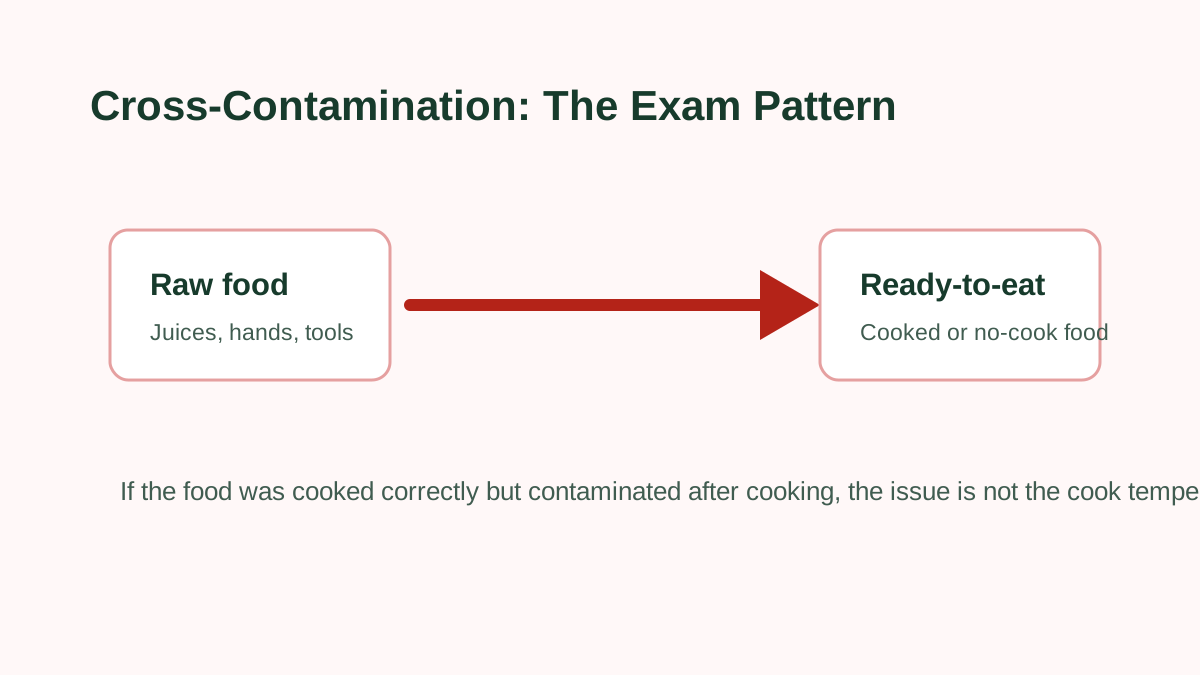
Cross-contamination practice should train you to spot how a hazard moved from one food, hand, surface, utensil, or storage area to another.
The correct manager action is often separation, cleaning and sanitizing, glove change, handwashing, retraining, or discard.
Practice prompts
For each prompt, identify the route of contamination and the corrective action.
Cooked burgers are placed on the same tray that held raw patties. What is the problem?
Raw chicken is stored above lettuce. Which storage principle was violated?
A prep cook changes from raw fish to salad without washing hands. What should happen first?
A knife used for raw beef is used on ready-to-eat tomatoes. What surface rule applies?
A peanut-containing dessert is cut with a knife later used for an allergen-free order. What is the risk?
Exam trap
If food was cooked to the correct temperature and then touched raw juice, the issue is no longer undercooking. It is contamination after cooking.
FAQ
Quick answers
What is the most important cross-contamination clue?
Look for raw food, ready-to-eat food, dirty equipment, bare hands, gloves used too long, or allergen contact.
Does cooking solve cross-contamination?
Not when contamination happens after cooking or involves ready-to-eat food.
What should I practice next?
Practice cleaning versus sanitizing and allergen cross-contact because they often appear with contamination questions.
Sources checked
Review basis
This page was last reviewed on July 5, 2026. It is written for exam practice and practical food safety learning, not legal compliance. Food rules and certification details can vary by jurisdiction, provider, and current official materials.
We check high-risk statements such as temperatures, time limits, discard decisions, hygiene, allergens, cleaning, sanitizing, cooling, and reheating against public references where available. If a sentence looks outdated or too broad, send the page URL and source to the contact page.