Independent food safety manager exam prep editors
Direct answer
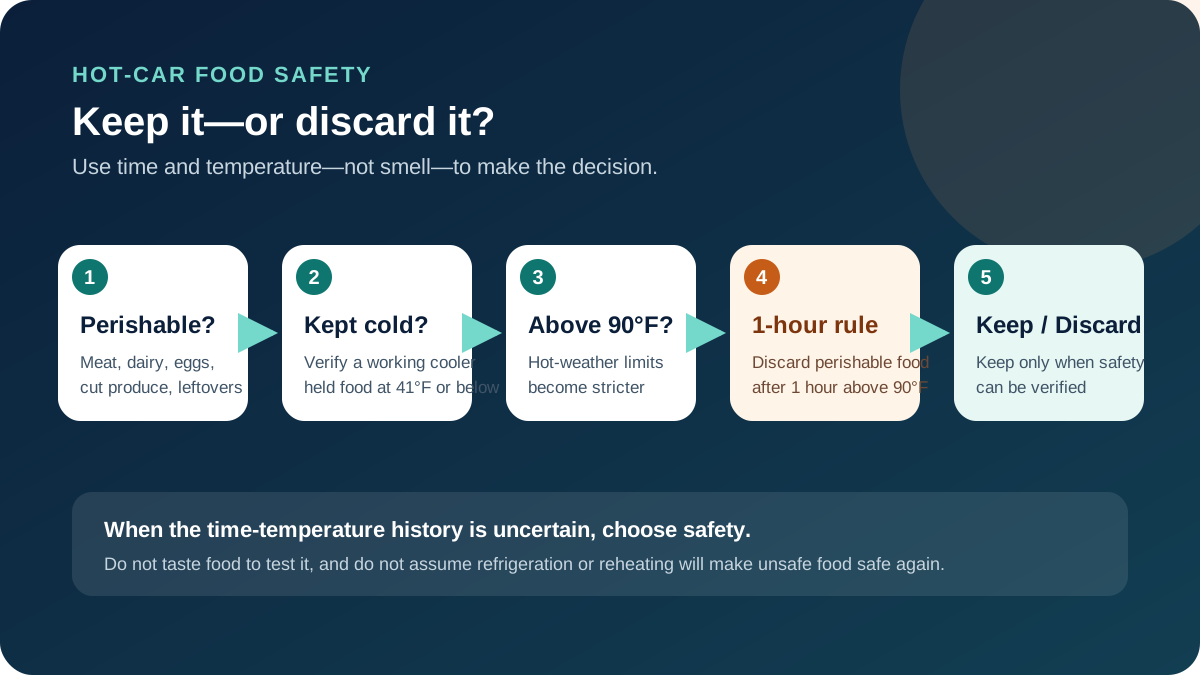
Perishable food left in a hot car should be treated cautiously. If meat, poultry, seafood, dairy, eggs, cut fruit, cooked rice, deli salads, or leftovers were not kept cold and the time-temperature history is uncertain, the safer decision is to discard them.
Shelf-stable foods such as unopened cans, dry crackers, many sealed pantry items, and whole uncut fruit are different. The risk question is whether the food needs time and temperature control.
The hot-car decision tree
Do not start with smell. Start with whether the food is perishable and whether it was held under control.
- If the food is shelf-stable and packaging is intact, it is usually lower risk.
- If the food is perishable and was not in a working cooler, use time and temperature limits.
- If the car was above 90°F, the outdoor hot-weather 1-hour limit is the right mental model.
- If you do not know when the food entered the danger zone, do not invent a safe answer.
- If packaging leaked, swelled, opened, or was contaminated, discard it.
Foods you should not gamble with
The foods most likely to become unsafe in a hot car are the same foods that show up in food manager questions about TCS food and the danger zone.
- Raw or cooked meat, poultry, seafood, and eggs.
- Milk, soft cheese, yogurt, cream desserts, and dairy dips.
- Cut melon, cut tomatoes, fruit salad, and leafy salads.
- Potato salad, pasta salad, chicken salad, tuna salad, and egg salad.
- Cooked rice, beans, pasta, potatoes, and leftovers.
What not to do
The dangerous fixes are tempting because throwing food away feels wasteful. A food manager answer must protect people before inventory.
- Do not taste food to see if it is still safe.
- Do not rely on smell, color, or texture.
- Do not put hot-car food back in the refrigerator and serve it later.
- Do not assume reheating solves unsafe holding.
- Do not mix hot-car food with a fresh batch.
ServSafe Manager takeaway
A hot-car question is usually testing time-temperature control, TCS food identification, corrective action, and active managerial control.
- Identify whether the food is TCS.
- Ask whether cold holding was maintained.
- Use the 1-hour rule when the scenario clearly says above 90°F.
- Discard when safety cannot be verified.
- Prevent recurrence with better cooler setup, logs, delivery checks, or staff training.
Practice the decision
Use realistic exam scenarios to practice hot-weather holding, the temperature danger zone, and when food must be discarded.