Independent food safety manager exam prep editors
Direct answer
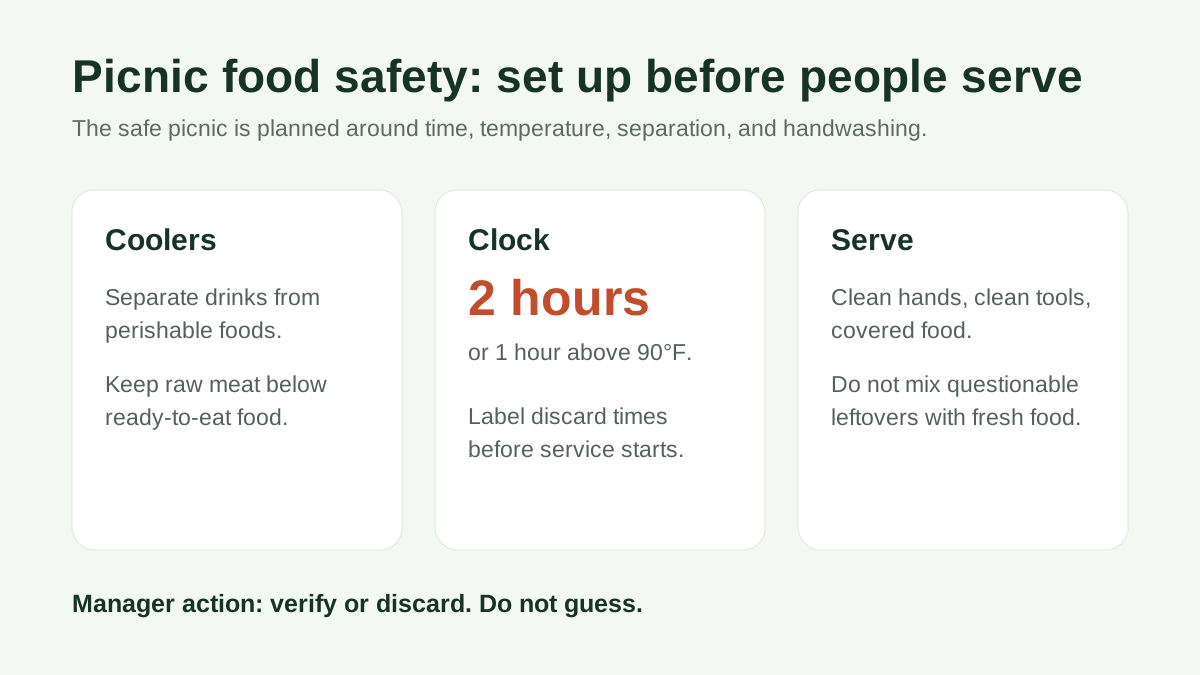
Perishable food should generally not sit out for more than 2 hours. If the outdoor temperature is above 90°F, use 1 hour as the limit. After that, the safer decision is to discard the food rather than taste it, smell it, reheat it, or put it back in the cooler.
For ServSafe Manager-style review, treat this as a manager decision: identify whether the food is TCS, check whether temperature control was maintained, verify the time, and discard when safety cannot be confirmed.
The rule people miss in hot weather
Many learners remember the 2-hour rule but miss the heat clue. Outdoor food is different because warm weather, direct sun, repeated cooler opening, and slow service can move food into the danger zone faster than a controlled kitchen.
The FDA's outdoor eating guidance uses the danger zone of 40°F to 140°F and shortens the usual 2-hour window to 1 hour when outdoor temperatures are above 90°F. That is the practical rule to remember for picnics, BBQs, food trucks, patio service, and summer catering.
- Under 90°F: use the 2-hour limit for perishable food that is not being held hot or cold.
- Above 90°F: use the 1-hour limit.
- Cold food should stay at 40°F or below for consumer guidance; manager exam prep often tests 41°F or lower for cold TCS holding.
- Hot food should stay hot; FDA consumer guidance uses 140°F or above, while manager exam prep commonly tests 135°F or higher for hot holding.
- If you do not know how long the food was out, do not invent a safe timeline.
Which foods are highest risk at a BBQ or picnic
The riskiest foods are usually the ones people keep serving casually: cut fruit, deli salads, cooked rice, burgers, chicken, seafood, eggs, dairy-based desserts, cooked beans, sauces with dairy or egg, and any cooked TCS food held without temperature control.
Shelf-stable snacks are different. Chips, crackers, whole uncut fruit, unopened shelf-stable drinks, and dry baked goods usually do not create the same time-temperature problem. The manager skill is knowing which foods need control and which foods do not.
- Cut melon and cut tomatoes need temperature control because cutting changes the risk.
- Cooked rice, pasta, potatoes, and beans are not harmless just because they are plant foods.
- Mayo is often blamed, but the bigger issue is usually time, temperature, hands, utensils, or cross-contamination.
- A cooler is not proof of safety unless the food actually stayed cold.
- Food can look normal and still be unsafe after time-temperature abuse.
Manager decision checklist
Use this checklist when deciding whether food from a hot outdoor event can be kept, served, or saved as leftovers.
- Name the food: is it TCS or perishable?
- Confirm the environment: was it above 90°F, in direct sun, in a hot car, or on a warm serving table?
- Check the control method: was it held at a verified safe cold or hot temperature?
- Check the clock: how long was it out after leaving temperature control?
- Check contamination risk: did raw meat juices, shared utensils, bare hands, insects, or dirty surfaces contact it?
- Choose the action: keep only when time, temperature, and contamination control are clear; discard when they are not.
What not to do after food sat out
The unsafe recovery moves are common because they feel practical. They are also exactly the kind of choices a manager exam tries to catch.
- Do not taste food to check safety.
- Do not rely on smell or appearance.
- Do not put time-abused food back in the refrigerator and serve it later.
- Do not assume reheating fixes everything; some hazards are not solved by reheating.
- Do not mix a questionable batch with fresh food.
- Do not let the cost of discarding food override the safety decision.
Heat-wave scenarios to practice
These are the kinds of real-life questions that also train exam judgment.
- A tray of cut watermelon sits outside at 93°F for 75 minutes. The safe action is to discard it because the 1-hour hot-weather limit was passed.
- Chicken breasts reach 160°F on the grill. Keep cooking because poultry needs to reach a safe final internal temperature before service.
- Burger patties are cooked and placed on the same platter that carried raw patties. The issue is cross-contamination after cooking, not undercooking.
- A cooler has enough ice but has been opened every few minutes for drinks and food. Move drinks to a separate cooler next time and verify food temperature rather than assuming safety.
- A guest asks whether potato salad left outside during a heat advisory is safe because it smells fine. Smell is not a safety test; use time and temperature.
How to prevent the problem next time
The best outdoor food safety plan is built before the first guest arrives. Decide where food will be held, who checks temperatures, and when food must be discarded.
- Use separate coolers for drinks and perishable foods so food coolers are opened less often.
- Keep cold foods on ice in shallow containers, and replace ice as it melts.
- Serve small batches and keep backup food cold or hot until needed.
- Write discard times on tape or labels for buffet pans and picnic containers.
- Use a food thermometer for cooked meat and poultry instead of judging by color.
- Keep raw meat, poultry, and seafood wrapped and separated from ready-to-eat foods.