Independent food safety manager exam prep editors
Direct answer
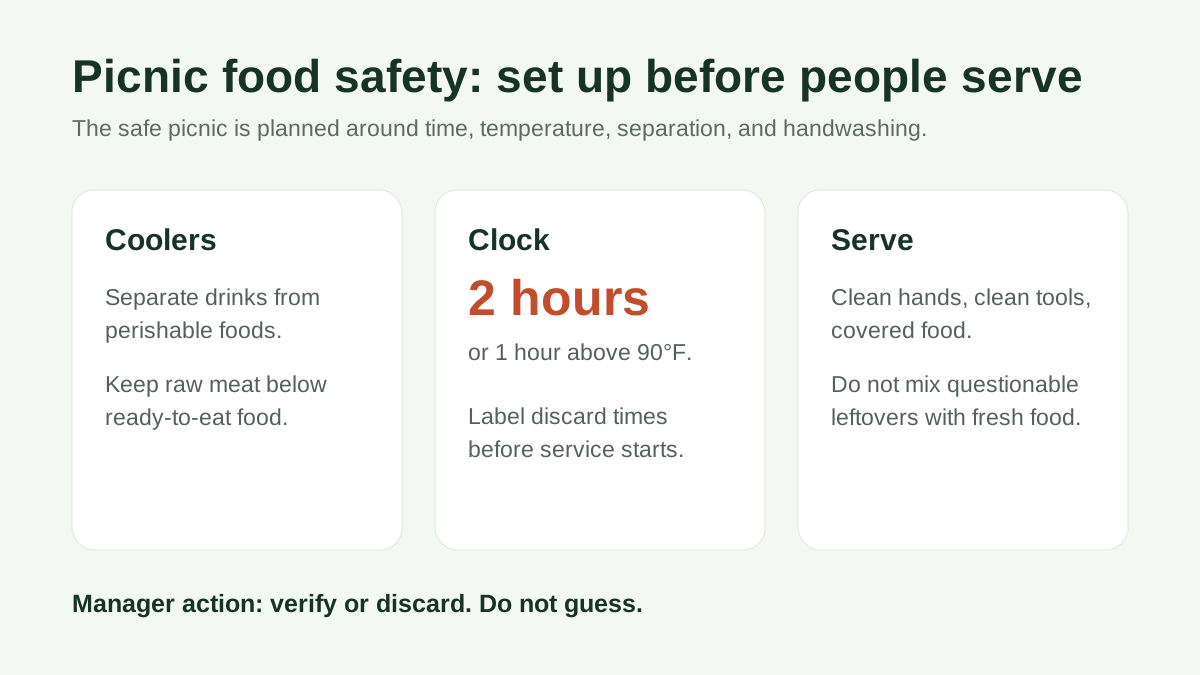
For a safe picnic, keep cold perishable food cold, keep raw meat separate from ready-to-eat foods, use clean hands and utensils, serve small batches, and discard perishable food after 2 hours, or after 1 hour when the outdoor temperature is above 90°F.
If you are studying for a food manager exam, treat a picnic as a temporary service line: the manager must control time, temperature, contamination, handwashing, and allergen communication.
Pack the cooler like a manager
A cooler is only useful when it keeps food cold and prevents cross-contamination. The most common mistake is putting drinks, raw meat, salads, and cut fruit into one cooler that is opened constantly.
- Use one cooler for drinks and another for perishable food.
- Pack raw meat, poultry, and seafood below or away from ready-to-eat foods.
- Use sealed containers or leakproof bags for raw animal foods.
- Pack food already cold; do not rely on the cooler to chill warm food quickly.
- Keep the cooler closed and shaded as much as possible.
- Use a thermometer when the picnic will last long enough for temperature to matter.
Foods that need the most control
The foods most likely to become a problem are the ones people leave out casually because they seem harmless.
- Cut melon, cut tomatoes, and fruit salads.
- Potato salad, pasta salad, egg salad, tuna salad, and chicken salad.
- Cooked chicken, burgers, hot dogs, ribs, rice, beans, and leftovers.
- Dairy desserts, soft cheeses, dips, and sauces with eggs or dairy.
- Any cooked TCS food that is no longer being held hot or cold.
Set the discard time before people eat
The safest picnic plan is not to debate food safety after everyone has eaten. Decide the discard time when food leaves temperature control.
- Use 2 hours as the general limit for perishable food.
- Use 1 hour when the outdoor temperature is above 90°F.
- Write discard times on tape or container lids.
- Serve smaller portions and keep backup food cold.
- Do not return questionable food to the cooler for later.
Exam-style picnic traps
Picnic questions often hide the rule in ordinary details: a hot car, a shared spoon, a cooler opened all afternoon, or raw meat stored above ready-to-eat food.
- A picnic table is not temperature control.
- Ice in a cooler does not prove the food stayed cold.
- Hand sanitizer is not a full substitute for proper handwashing when hands are dirty.
- A serving spoon used for raw marinade should not touch cooked food.
- Allergen questions require verified ingredients, not assumptions.