Independent food safety manager exam prep editors
Direct answer
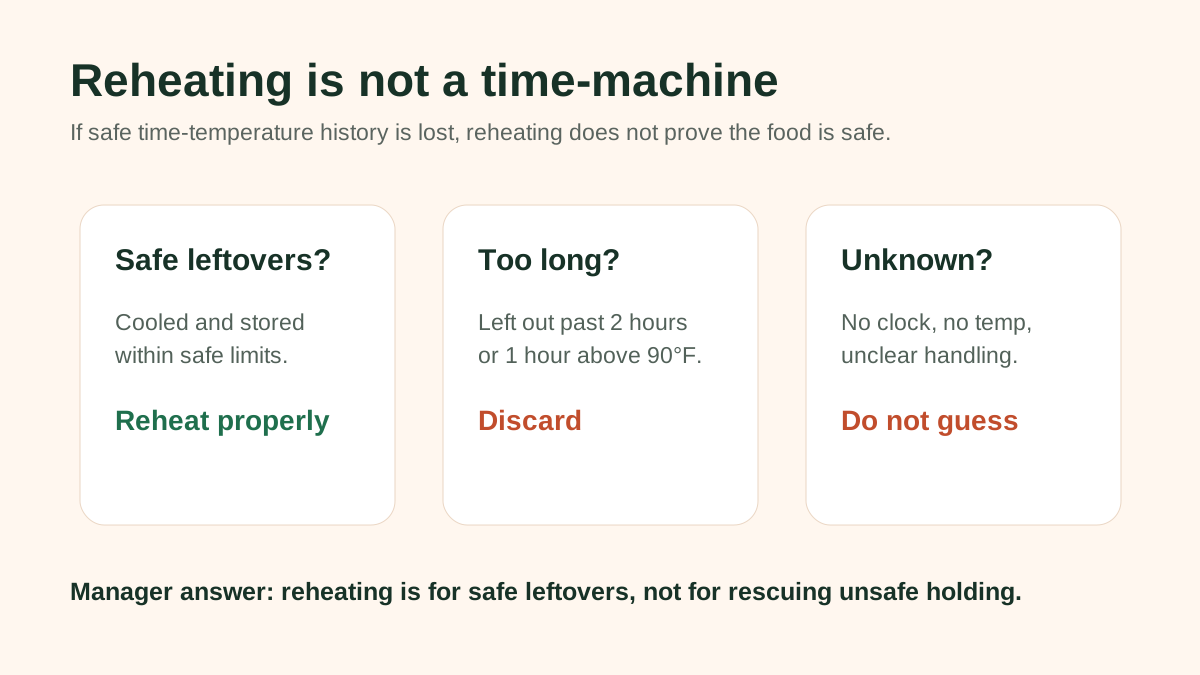
Do not reheat perishable food as a rescue step after it has been left out too long. If food exceeded the safe time window, or if you cannot verify how long it was out, the safer decision is to discard it.
Reheating is appropriate for leftovers that were cooked, cooled, stored, and handled safely. It is not proof that time-abused food is safe.
Why reheating is the wrong fix
The mistake is treating temperature as the only issue. Food safety also depends on how long the food supported pathogen growth, whether contamination occurred, and whether hazards may remain after reheating.
- Time-temperature abuse can make food unsafe before it looks spoiled.
- Some hazards are not solved by simply making food hot again.
- Unknown holding history is not a safe starting point for service.
- Reheating does not fix cross-contamination from raw juices, dirty utensils, or bare hands.
- The cost of food is not a reason to override a discard decision.
When reheating is appropriate
Reheating belongs in the process for safe leftovers, not for food that already failed holding rules.
- The food was cooked safely.
- It was cooled safely and refrigerated promptly.
- It was stored at safe cold holding temperatures.
- It was protected from contamination.
- It is reheated according to the correct rule for the food and service use.
Common scenarios
These examples show the difference between safe reheating and unsafe rescue attempts.
- Safe: soup cooled correctly, refrigerated overnight, then reheated for hot holding.
- Unsafe: cooked chicken sat on the counter overnight, then someone wants to reheat it.
- Unsafe: rice sat at room temperature for several hours and the time is unknown.
- Unsafe: cooked burgers reached the right temperature but were put back on the raw-meat plate.
ServSafe Manager takeaway
Manager exam questions often include reheating as a tempting answer. Choose it only when the food's earlier handling was safe.
- If food was safely stored, reheating may be the correct process step.
- If food was time-abused, discard is usually the safer manager action.
- If contamination happened after cooking, reheating may not be the right corrective action.
- If the history is unknown, do not guess.