Independent food safety manager exam prep editors
Direct answer
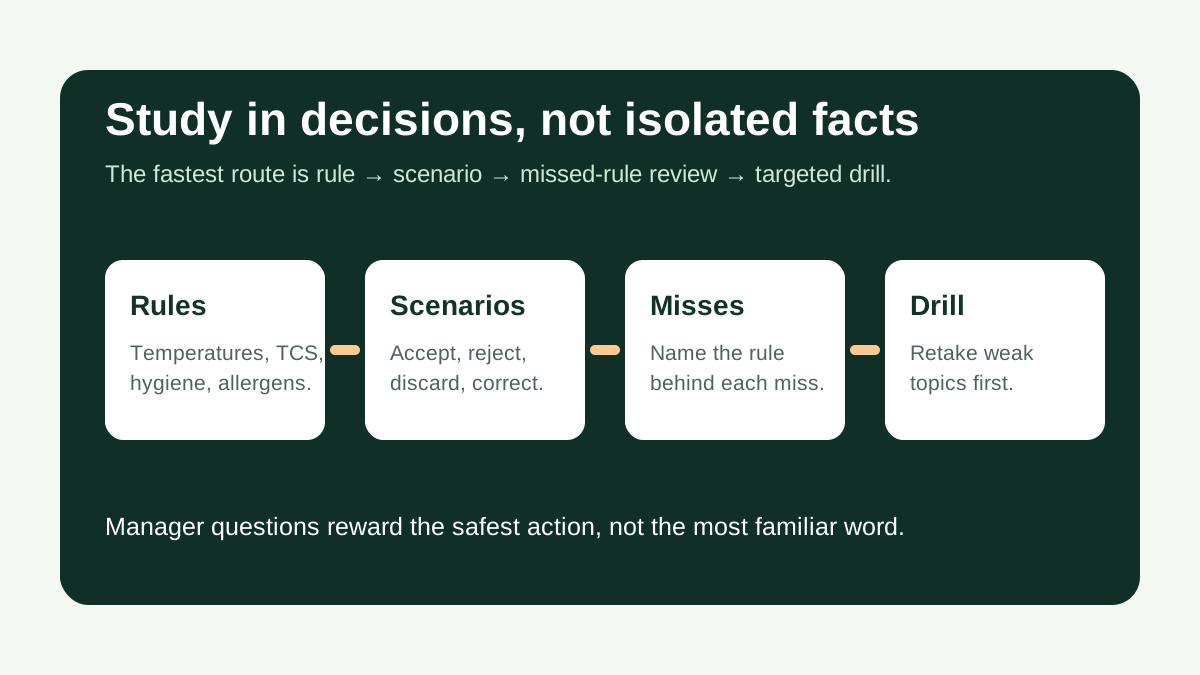
The best way to study for the ServSafe Manager exam is to learn the high-frequency rules, answer scenario questions, and use every missed question to identify a rule you still cannot apply.
Start with TCS foods, temperature control, cooling, reheating, personal hygiene, cross-contamination, allergens, receiving, storage, cleaning, sanitizing, and active managerial control.
Study in manager decisions, not isolated facts
Manager-level questions usually ask what should be accepted, rejected, monitored, corrected, documented, restricted, excluded, cooled, reheated, discarded, cleaned, or sanitized.
When a question asks what the manager should do first or best, look for the answer that controls the hazard now and prevents the same problem from recurring.
- Delivery problem: accept, reject, or verify.
- Temperature problem: identify the task before choosing the number.
- Employee illness: restrict, exclude, or return only when allowed.
- Contamination risk: separate, clean, sanitize, discard, or retrain.
- System failure: monitor, document, correct, and verify.
High-value topics to master first
Most score improvement comes from mastering the topics that appear across many different scenarios.
- TCS foods and the temperature danger zone.
- Cooking, holding, cooling, reheating, and receiving temperatures.
- Personal hygiene, handwashing, and employee illness decisions.
- Cross-contamination, storage order, and allergen cross-contact.
- Cleaning, sanitizing, sanitizer concentration, contact time, and air-drying.
- Active managerial control: monitoring, corrective action, and verification.
How to review a missed question
Do not only count right answers. For each missed question, write one sentence that names the rule. Then answer a second question from the same category before moving on.
- Missed because you forgot a number: review the chart and practice scenarios.
- Missed because you chose the wrong action: identify the hazard and corrective action.
- Missed because two answers sounded right: decide which answer controls risk first.
- Missed because of local or official exam details: verify current official materials.
A practical 7-day review loop
A realistic study plan should mix reading, recall, and practice. Reading alone creates false confidence because the exam changes the wording.
- Day 1: TCS foods, danger zone, holding, cooking, and receiving.
- Day 2: Cooling, reheating, and corrective action.
- Day 3: Hygiene, employee illness, and handwashing scenarios.
- Day 4: Cross-contamination, storage order, and allergens.
- Day 5: Cleaning, sanitizing, equipment, and facilities.
- Day 6: Full practice set with explanations.
- Day 7: Retake weak categories and review the cheat sheet.