Reviewed 2026-07-31; official references are listed below.
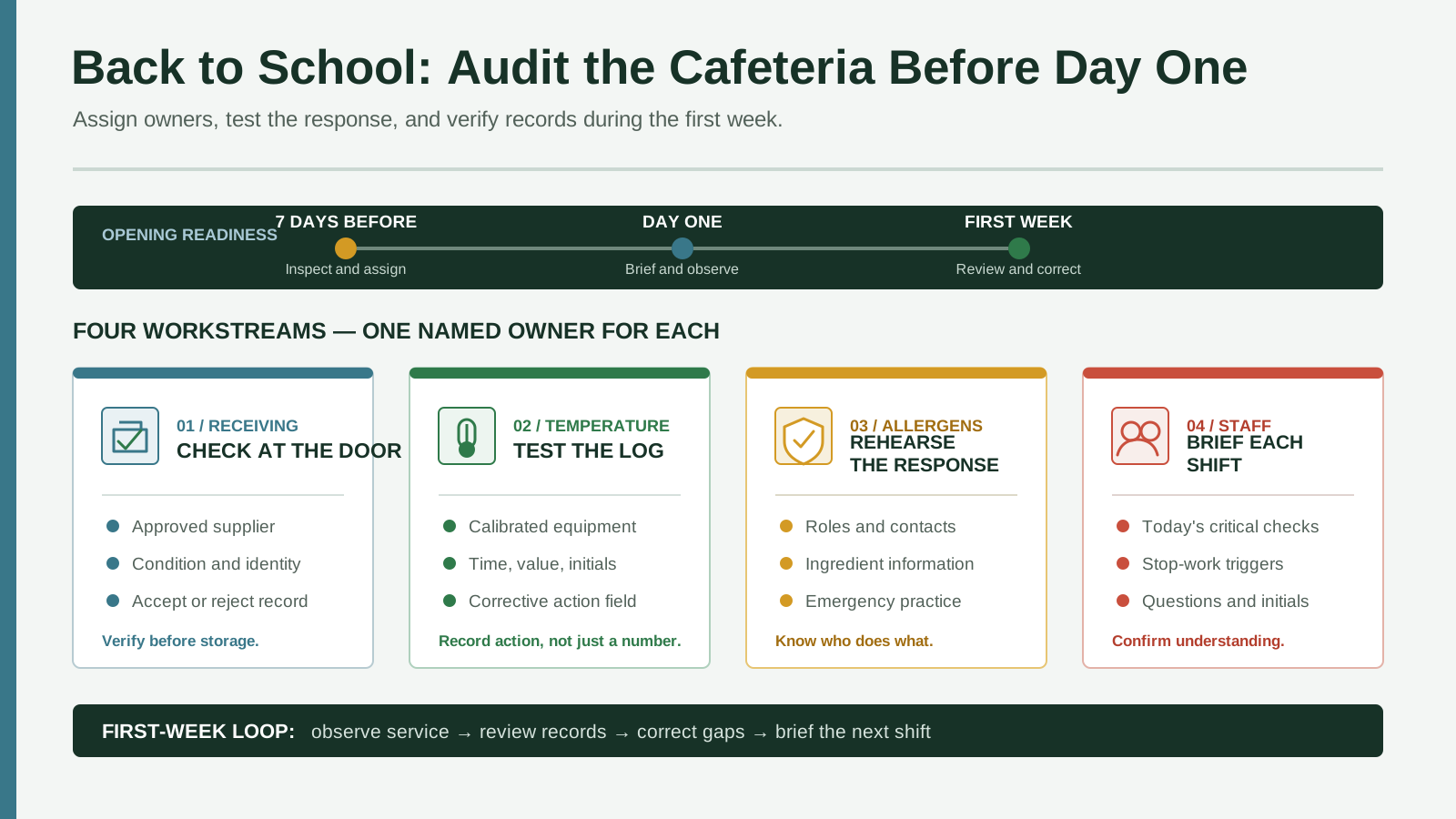
Direct answer / hypothetical incident:
If opening shift finds a warm cooler, unbriefed substitute and recall notice, stop affected service. Hold and label implicated food; probe temperatures; match recall IDs; brief the substitute; document disposition; escalate under district/local rules. A display, quick reheat or verbal assurance is not corrective action.
Who this checklist is for—and what it is not
This guide covers U.S. school foodservice from receiving through service, including satellite sites.
For an NSLP school food authority, 7 CFR 210.13(c) requires a written food safety program for every facility or facility part where program food is stored, prepared or served, using traditional HACCP principles or the regulation's process approach. USDA guidance applies this HACCP-based program to NSLP and SBP operations. This child-nutrition-program requirement is not a nationwide retail HACCP law.
Under 7 CFR 210.13(b), NSLP schools must obtain at least two state/local governmental food safety inspections each school year, publicly post the latest report and provide a copy on request. The narrow aggregation rule allows only two total when multiple child nutrition programs share the same meal-production and service facilities; it does not exempt a separate site. USDA guidance citing 7 CFR 210.13 and 220.7 covers NSLP/SBP preparation-service and service-only sites, with inspection scope set by the inspecting agency.
The FDA Food Code is a model, not nationwide law. The latest full edition is the 2022 Food Code (January 18, 2023 version), with a December 2024 Supplement; jurisdictions may adopt and amend another edition. Verify every benchmark below locally.
It neither replaces the district HACCP plan nor sets medical protocols or food dispositions.
The real 7-day pre-opening audit
| Day | Manager's audit | Evidence required before sign-off |
|---|---|---|
| Day -7: scope and authority | Map all receiving, storage, prep and service locations to the HACCP-based program; identify controlling code/amendments. | Site list; plan/SOP revision; regulator contact; inspection/posting status. |
| Day -6: utilities and equipment | Load-test refrigeration, hot holding and warewashing; check probes, alarms, test strips, water and backups; review vomit/diarrhea response. | Results; tickets; calibrated backup probe; cleanup kit; failure tags. |
| Day -5: suppliers and recall control | Confirm suppliers, delivery windows, after-hours contacts and lot/date capture; run a central/satellite recall drill. | Supplier list; invoice/label; roster; reconciliation and corrections. |
| Day -4: menu process walk | Trace each opening-week item through receipt, cooking, cooling, reheating, transport, holding and service. | Process map: limit, monitor, correction and owner. |
| Day -3: allergen controls | Recheck labels, recipes and substitutions; test alerts; observe cross-contact controls; rehearse the role card. | Labels; approved substitutions; tools/cleaning plan; contacts; sign-off. |
| Day -2: people | Review illness reporting and local work/return rules; cross-train; brief substitutes with teach-back. | Acknowledgement; roster; briefing record; decision tree. |
| Day -1: full rehearsal | Test delivery, menu, transport/line, logs and one equipment failure; close gaps before release. | Mock logs; disposition/escalation records; release or delayed opening. |
First-week control board and logs
Post PIC, backup, nurse/administrator, facilities, vendor and regulator contacts. Use district forms; record observations and corrections, not initials alone.
| Log, completed each operating day | When and what to record | Model benchmark for local verification | If the check fails |
|---|---|---|---|
| Opening | Before prep: unit/display, representative food temperature, water/warewashing, probe, sanitizer/test, illness check, PIC. | Equipment supports process; accurate thermometer available. | Stop, tag unit, probe food, protect/relocate under plan, call facilities, document disposition. |
| Receiving | Each delivery: time, vendor, item, lot/date, package, temperature, frozen state, decision. | Cold TCS ≤41°F (5°C); TCS food cooked and received hot ≥135°F (57°C); raw shell eggs in ≤45°F (7°C) ambient equipment; shipped-frozen food received frozen. Verify exceptions. | Segregate; reject or hold for authorized decision; retain IDs; notify vendor. Never average readings. |
| Cold holding | Opening, pre-service and local intervals: item, unit, time, food temperature, action. | ≤41°F (5°C) model benchmark. | Stop service; probe foods; establish history; move only to verified capacity; follow disposition rule. |
| Hot holding | Pre-release and local intervals: item, pan, time, food temperature, action. | ≥135°F (57°C) model benchmark. | Remove pan; reheat only with verified history and approved procedure, otherwise hold for disposition. |
| Cooling | Item, batch/container, start, first-stage and final times/temperatures, method, action. | Cooked TCS: 135°F to 70°F (57°C to 21°C) within 2 hours, then ≤41°F (5°C) within 6 total hours. | On first miss, apply written correction while safe; otherwise discard under plan. Do not wait overnight. |
| Reheating for hot holding | Item, batch, start/finish time and temperature, method, initials. | Onsite-cooked/cooled: 165°F (74°C) for 15 seconds, within 2 hours from 41°F (5°C). Commercial packaged food differs; verify locally. | Meet the window or stop and follow disposition; holding equipment must achieve the approved reheat limit. |
Related internal guides cover receiving temperatures, hot and cold holding, cooling rules, reheating for hot holding and food safety temperatures.
Allergen emergency role card
Print with site names. CDC school-allergy guidance is voluntary, not a nationwide medication or staffing duty. Response is subject to the student's emergency care plan, state law/regulation, school/district policy, trained/delegated/authorized staff roles and school emergency protocols.
| Role | Immediate action |
|---|---|
| Witness / student lead | Stay with the student; activate the student plan and school emergency protocol. Never send the student alone. |
| Trained and authorized responder | Follow the plan/protocol. Give epinephrine only when directed and when trained, delegated and authorized; activate 911/EMS as directed. |
| Communicator | Tell nurse/administrator "allergy emergency," location, symptoms and actions; contact family without delaying response. |
| Food-control lead | Stop item; preserve label, recipe and utensils; identify service. Do not diagnose or promise "allergen-free." |
Upstream, recheck labels after substitutions, control cross-contact and retain recipe/ingredient information. See food allergens and cross-contamination prevention.
Substitute employee briefing: before hands touch food
Brief and demonstrate before assignment.
- Employees report only symptoms, diagnoses, past illnesses/exposures and conditions specified by the adopted code and district employee-health policy. The PIC applies their distinct reporting, restriction/exclusion, regulator-notification and reinstatement rules; no diagnosis or exposure has a universal action. Separately, CDC advises workers with norovirus symptoms not to handle food until at least 48 hours after symptoms stop; adopted code and district return policy still control.
- Show hand sink, utensil/glove and ready-to-eat controls, allergen tools, chemicals and employee storage.
- Assign one station, recipe, limits and logs; demonstrate probe use and cleaning. Manager approval plus a label/recipe recheck is required for substitutions.
- Require teach-back of the check, record and failure response; record person, station, time and result.
Recall drill: trace, hold, reconcile
USDA FNS provides the school mock-recall method and USDA Foods procedures.
- Mark communications "THIS IS A TEST." Select a distributed item; alert vendor and district emergency/communications leads.
- Start the clock; issue product, supplier, lot/GTIN, dates, photo and shipped quantities.
- Sites stop use, isolate matches and report stored, in-production and served amounts; real recalls await authorized disposition.
- Trace supplier-to-service; reconcile delivered, located, used, transferred and missing product.
- Record finish/gaps; assign corrective-action owners/dates and revise the SOP.
Assign a monitor and backup for FDA recalls, FSIS recalls/public-health alerts, state agency/SENS notices, and supplier/distributor/manufacturer notices. No single federal list covers every product; do not rely on social posts.
Keep channels distinct. For USDA Foods, follow USDA/state-distributing-agency/SENS notices, hold matches, report requested quantities/locations and await that channel's disposition. For commercial purchases, match supplier/distributor notice to the applicable FDA, FSIS or state notice, hold product, and follow firm/authority disposition. School receipt does not convert a commercial recall into a USDA Foods recall.
The recall checklist example demonstrates an identifier-based hold.
Equipment failure and escalation table
| Trigger | Protect food and people | Escalate and document |
|---|---|---|
| Refrigeration alarm/warm reading | Stop loading/service; probe food; close doors; move only to verified capacity; hold uncertain food. | PIC → facilities → district; regulator as required. Record time, temperature, disposition. |
| Hot-holding failure | Remove pans; verify food/time history; never mix with fresh food. | PIC/facilities; record authorized reheat or disposition. |
| Power outage / extended electrical interruption | FDA's model-code imminent-health-hazard threshold is a significant threat requiring immediate correction or cessation to prevent injury, judged by potential injury count, nature, severity and duration. If it may exist, immediately stop affected operations and notify the regulator. Continue only in an unaffected area or, solely for extended electrical interruption, under a regulator-agreed approved written emergency operating plan with immediate corrective action and notice when implemented. | Protect food; record outage/time-temperature history. Obtain regulator approval before reopening stopped operations. |
| Water interruption/advisory | Apply that same threshold; if a hazard may exist, immediately stop affected operations and notify the regulator. Continue only in an unaffected area or, solely for extended water interruption, under a regulator-agreed approved written emergency operating plan with immediate corrective action and notice when implemented. Boil-water addresses germs using boiled/approved water; do-not-drink requires alternative drinking/cooking water because boiling may not remove chemicals/toxins; do-not-use prohibits all tap-water use. Follow the actual advisory for hands, food, ice, beverages, cleaning and warewashing. | Stop uses without an approved safe-water alternative; isolate connected equipment as directed. Obtain regulator approval before reopening and follow flushing/release instructions. |
| Sewage backup | Under the same FDA model-code significant-threat threshold, sewage backup may be an imminent health hazard. If it may exist, immediately stop affected operations, notify the regulator, block access and protect food/equipment. Only unaffected areas may continue; the written-plan exception applies solely to extended electrical/water interruption, not sewage. | Notify facilities, administrator and regulator; record containment, cleanup and disposition. Obtain regulator approval before reopening. |
| Thermometer/warewasher/sanitizer control fails | Remove device; use verified backup or approved manual process/test, otherwise stop task. | PIC/service provider; record device, test, repair, release. |
Local-regulator verification before release
Have the state/local regulator identify controlling text for the adopted code/amendments; temperature limits; time control; employee health/return; vomit/diarrhea response; utility emergencies; inspections; and questionable-food disposition. File it with the plan. Federal NSLP/SBP inspection requirements are separate from local retail-code adoption.
Do not do these opening-week mistakes
- Do not call FDA model benchmarks local law.
- Do not use a display as proof of food temperature or reheat away unknown history.
- Do not backfill logs or record initials without observations.
- Do not let unbriefed substitutes improvise recipes, allergen substitutions or corrections.
- Do not send a student with a suspected allergy reaction away alone.
- Do not discard/return recalled stock before capturing identifiers, quantities and authorized disposition.
Educational disclaimer
This educational checklist is not legal, regulatory, medical or site-specific HACCP advice. The SFA, district, student medical plan and regulator control. If food history or authority is uncertain, stop, hold and escalate.