Reviewed 2026-07-24; official references are listed below.
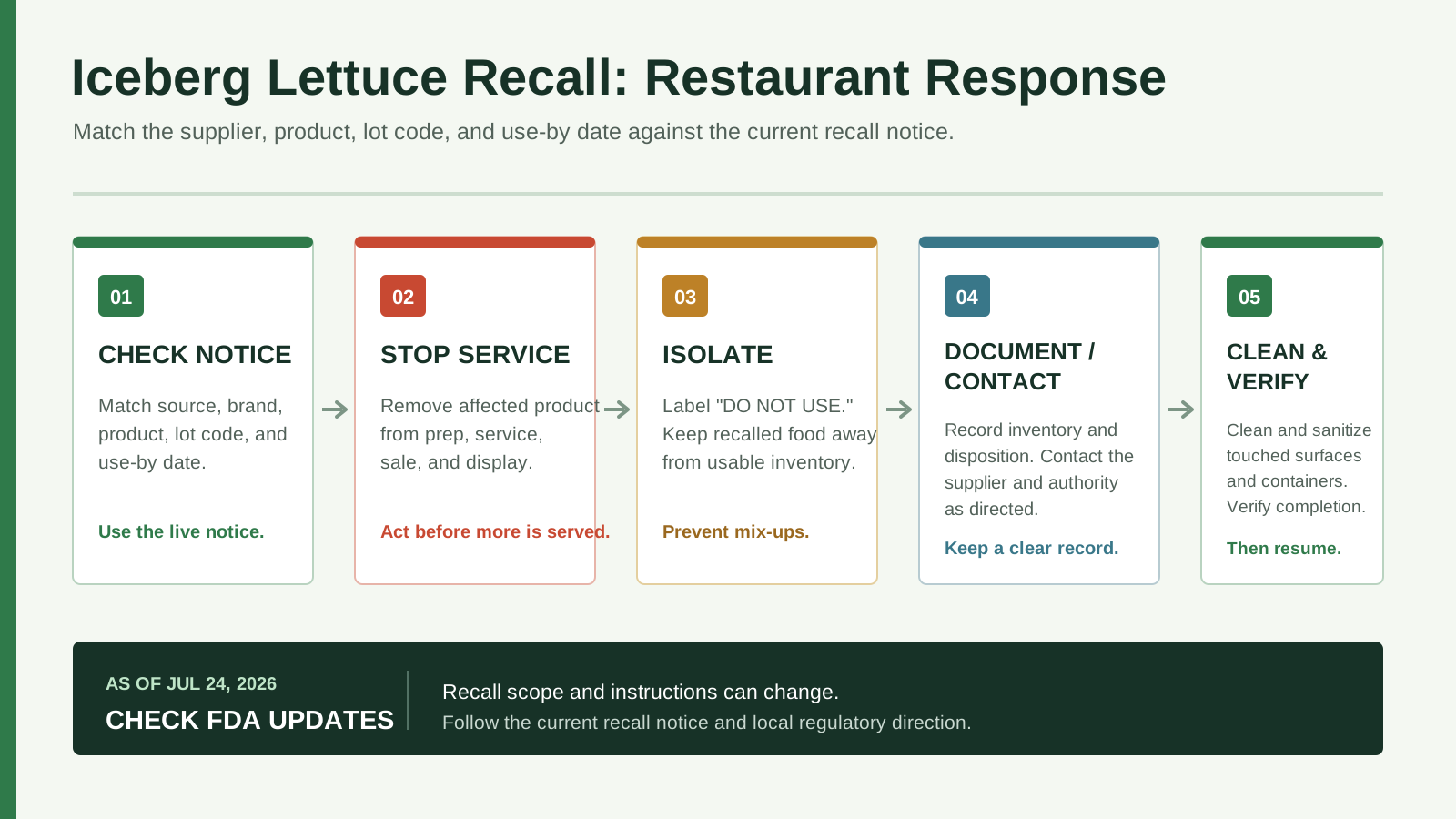
Direct answer
Do not wash, sanitize, cook, or trim recalled lettuce to return it to service. As of July 24, 2026 at 8:52 a.m. PDT, FDA and CDC described the investigation as ongoing, so the recall scope and illness counts may change.
The outbreak investigation is linked to shredded iceberg lettuce from Taylor Farms de Mexico and growers in central Mexico. The July 17 voluntary recall is broader: it covers all iceberg lettuce sourced from central Mexico by Taylor Farms de Mexico, including listed straight-iceberg products and blends containing iceberg.
As of that source check, CDC reported at least 1,947 people in nine states who reported Taco Bell exposure, 98 hospitalizations, and no deaths. These outbreak illnesses are a subset of Cyclospora infections identified nationwide, so the figures are a time-bound snapshot rather than final totals.
Do not confuse the nine case-reporting states with product distribution. FDA listed recalled foodservice distribution in 27 states, while its overall product-distribution list reached 28 states when West Virginia retail distribution was included. FDA also said product may have traveled farther. Geography cannot clear inventory; verify the product itself.
The 10-minute manager check
Compare supplier records, the physical product, identifiers, dates, and every location where the lettuce may have moved. A front-of-house menu name is not enough to identify the source case.
When identity is uncertain, hold the food. A missing box, invoice, or readable lot is not evidence that product is outside the recall. Obtain the current supplier notice and written confirmation for the product received.
- Supplier and source: compare invoices, purchase orders, delivery records, case labels, and supplier notices. Taylor Farms de Mexico, Taylor Fresh Foods, or an unclear source requires a hold while the source is verified.
- Product: check iceberg, shredded lettuce, chopped lettuce, salad mix, and lettuce or romaine blends. The outbreak link is shredded iceberg, but the recall is broader, so match the exact FDA description.
- Brand or identifier: FDA's table includes CV, JB, MARK, MKTSD, PK, SUB, SY, and TF entries. Trace the original supplier case even when the menu uses another name.
- Lot code: compare the case and inner-package lot with the supplier notice. FDA's public table did not provide an independent lot-code column at the source-check time, while CDC reported multiple lots. Hold product whose lot cannot be verified.
- Best-if-used-by or use-by date: match the date to the exact product row. Dates in FDA's table extended from July 16 through August 3, 2026, but that overall span cannot replace row-level matching.
- Receiving date and location: trace receiving logs and transfers between units, including opened cases, partially used stock, and prepped product.
- Prepared food: check prep sheets, batch labels, salad stations, garnish bins, sandwiches, catering stock, and employee meals. Stop service and hold food that may contain recalled lettuce.
Stop use and sale
Pause affected menu items and tell every shift not to use the product. Check backups, reach-ins, the walk-in, prep tables, catering stock, and any unit that received a transfer. FDA tells restaurants and retailers not to serve or sell recalled produce.
The stop-use instruction applies to unopened cases, opened bags, prepped containers, garnishes, blends, and finished menu items that may contain the recalled lettuce. Do not let a busy shift or low inventory turn an unresolved recall match into a service decision.
Segregate and control suspect inventory
Move unopened and opened suspect product away from food, equipment, utensils, and linens. Place it in a controlled area with a clear DO NOT USE - RECALL HOLD label and restrict access so another shift cannot return it to production.
Follow recall and supplier return or disposal instructions. Retain product when an authorized party instructs you to preserve it for pickup, testing, or investigation, and keep the hold area from contaminating other inventory.
Document the response
Create one incident record that lets the next shift, company food-safety lead, supplier, and regulator reconstruct what happened. Preserve invoices, case-label photos, prep records, and written supplier confirmation, while excluding customer or employee personal information from routine photos.
- Record the date and time the alert was received, the source of the alert, and who took charge.
- Record the supplier, invoice, delivery date, product, package size, lot, and use-by date.
- Account for quantities received, used, transferred, held, returned, or discarded.
- List menu items and prep batches that may have contained the lettuce.
- List locations, shifts, and employees notified, plus supplier, corporate food-safety, and regulatory contacts.
- Record cleaned and sanitized areas, chemicals, concentrations, contact times, and completion checks.
Contact the right parties
Call the supplier through a verified business contact. Ask for the current notice, product and lot details, disposition instructions, and written confirmation for replacement product. Do not rely on an unverified message or a general product description.
FDA's retailer guidance says foodservice operators that handled recalled or potentially contaminated food should contact their local health department and communicate with customers regarding possible exposure. Contact the local regulatory authority and the company's food-safety lead promptly, then follow their direction on reporting and customer communication.
Do not improvise a public health statement or diagnose an employee or guest. Use the approved incident process, preserve relevant records, and protect personal information.
Assess cross-contamination and affected food
Identify containers, shelves, cutting boards, utensils, prep sinks, salad spinners, carts, display cases, and refrigerator surfaces that may have touched the lettuce or its packaging. Determine whether shared prep exposed another food, and hold questionable food while the person in charge applies approved procedures and local requirements.
This is the same control logic used in cross-contamination and receiving decisions: trace the source, define the affected area, prevent further exposure, and verify the corrective action before releasing food or equipment.
Wash, rinse, sanitize, and verify
Remove food and debris, wash affected equipment and surfaces, rinse when required, and sanitize with the facility's approved food-contact sanitizer at the label concentration and contact time. Air-dry where required. Wash hands with soap and water after handling recalled product and after cleaning.
CDC's warning that routine chemical disinfection may not kill Cyclospora refers to contaminated food or water. It does not remove FDA's direction to clean and sanitize facility surfaces, containers, refrigerators, utensils, and equipment that touched recalled lettuce. Never treat sanitizing lettuce as a way to release recalled product.
The exam rule and the operating rule
For food safety manager study, identify the recalled food, stop service, separate and label it so it cannot be used, notify the appropriate people, follow disposition instructions, and prevent cross-contamination. This is a study sequence, not a quoted exam question or a substitute for the current exam blueprint.
In an actual restaurant, follow the live recall, supplier instructions, company plan, sanitizer label, employee-illness policy, and local or state regulatory authority. This page is educational preparation, not medical, legal, or regulatory-approval advice.
Why washing does not cancel a recall
For produce that is not recalled, thorough washing under running water may reduce risk but cannot guarantee Cyclospora removal. CDC says cooking to at least 158°F, or 70°C, can kill the parasite.
Neither washing nor cooking can replace recall disposition. Recalled lettuce must remain out of service and be returned or discarded as instructed by the recall, supplier, company process, and regulatory authority.
If someone reports symptoms
Do not diagnose cyclosporiasis. CDC lists watery diarrhea as the most common symptom; other possible symptoms include loss of appetite, cramping, bloating, nausea, and fatigue. Symptoms usually begin about one week after exposure but may start from two days to two weeks or more later.
Direct a symptomatic person to a healthcare provider and follow the employee-illness policy and local reporting rules. For a guest report, use the approved incident process, protect personal information, and contact the health department and company food-safety lead.