Reviewed 2026-08-02; official references are listed below.
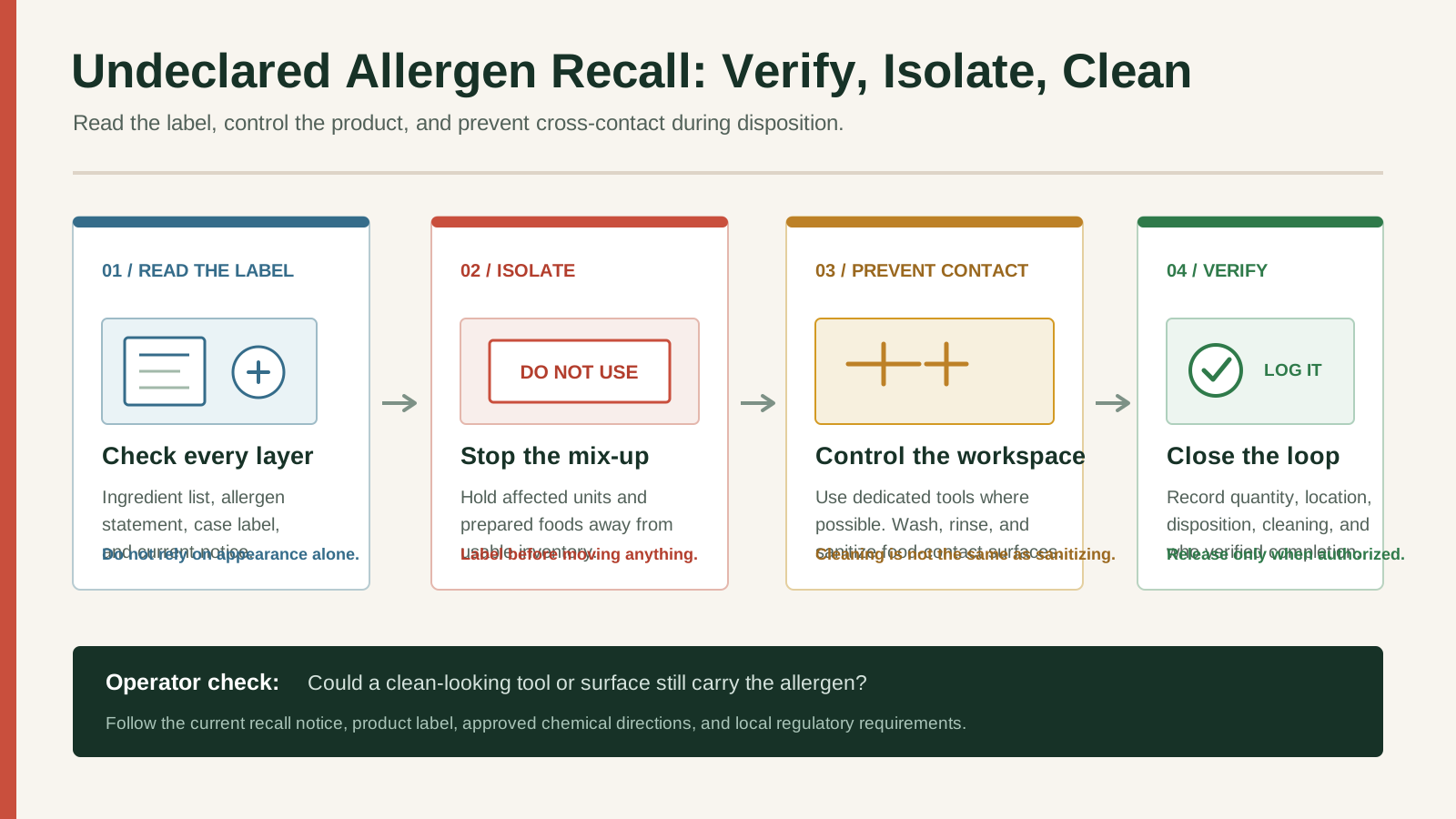
Direct answer - recall snapshot (FDA notice checked August 2, 2026)
On July 31, 2026, FDA posted Lidl US's expanded recall of two Eridanous shortbread cookie products because some units had foreign-language packaging without English ingredient, Nutrition Facts or required allergen declarations. The affected products were distributed July 15 through July 28 to Delaware, the District of Columbia, Georgia, Maryland, New Jersey, New York, North Carolina, Pennsylvania, South Carolina and Virginia. The notice reported no illnesses to date. That is a time-bounded status statement, not a safety clearance.
This is an undeclared-allergen labeling recall, not an announcement of Salmonella, E. coli, Listeria or another microbial contamination event. The official notice, supplier instruction and AHJ direction control the operational response. This article is educational and not medical or legal advice.
| Product | Size | UPC | Notice issue |
|---|---|---|---|
| Shortbread cookies with chocolate truffle coating and apricot filling | 11.6 oz (330 g) | 4056489125839 | Foreign-language package without required English declarations |
| Shortbread cookies with apricot filling, cocoa topping and coconut sprinkles | 11.6 oz (330 g) | 4056489125846 | Same packaging and declaration problem |
A 20-minute manager response
The timing below is an operational sequence, not a federal deadline. Local rules, company procedures and supplier instructions may require additional actions.
| Time | Action | Evidence to retain |
|---|---|---|
| 0-3 minutes | Stop sale, service, sampling, donation and use of both UPCs; alert PIC and purchasing. | Notice time and locations notified |
| 3-7 minutes | Place sealed and opened packages in a marked recall hold area. | Photos, count and storage location |
| 7-11 minutes | Search sales floor, back stock, displays, catering stock, snack areas and transfers. | Locations checked and staff initials |
| 11-15 minutes | Review invoices, receiving, transfers and prepared foods made with the cookies. | Supplier, dates, quantities and recipes |
| 15-18 minutes | Preserve packaging and contact Lidl, supplier, quality team or AHJ. | Contact and written instruction |
| 18-20 minutes | Clean and sanitize affected food-contact surfaces after product control. | Cleaning record and release authority |
Opened packages and prepared food
An opened box remains part of the recall if its identity matches either UPC. Do not use it up, relabel it, remove a visible topping or place it into a mixed dessert display. If the original package is missing but records connect the food to a recalled UPC, hold the prepared food and document that connection. If the cookie was used in a dessert, garnish, sample or employee meal, do not release it merely because it was baked or hidden in another item; obtain written disposition direction.
If identity cannot be established, keep the food out of service while tracing and do not create a label from memory. If records prove a different product and UPC, document why it is outside this notice and check whether another recall applies. Consumer discard/return instructions do not automatically answer every business disposition question.
Search secondary containers, catering stock, employee snack areas, displays and inter-unit transfers. A missing box does not make a prepared product traceable. Preserve the original package and UPC whenever possible, and keep held product physically separated from saleable inventory so that a rushed service decision cannot reintroduce it.
Cleaning, sanitizing and cross-contact control
After stock and affected food are controlled, map every surface that may have contacted the cookies or crumbs: display trays, tongs, boards, scales, counters, storage bins, carts, shelves and shared utensils. Remove food residue, clean, then sanitize using the product label, equipment instructions and the locally adopted code. Cleaning and sanitizing are separate steps; sanitizer does not replace washing away soil.
The FDA Food Code is a model offered for adoption by state, local, tribal and territorial jurisdictions. For a ServSafe-style answer, control the recalled food, remove debris, wash, rinse as required, sanitize at labeled concentration/contact time, and allow food-contact items to drain or air-dry as required. Employees should wash hands with soap and water after handling recalled product and cleanup; surface sanitizer is not a handwashing substitute.
Staff should know not to taste, sell, sample or privately consume held product. Verify replacement utensils and surfaces before reuse, keep chemicals away from food, and record the product label or sanitizer concentration used. A recall hold does not eliminate the need to control crumbs and cross-contact in shared equipment.
The coconut labeling boundary
The company announcement uses the phrase tree nut (coconut), while current FDA guidance uses a more specific legal vocabulary. FDA's current allergen page identifies nine major food allergens, including tree nuts, peanuts, wheat, soybeans and sesame. FDA's January 2025 Edition 5 guidance explains that several tree nuts, including coconut, are no longer considered major food allergens under that guidance.
That does not mean a coconut-containing product is universally safe, and it does not cancel this recall. A person may have an individual coconut allergy, sensitivity or another medical reason to avoid coconut. Treat the recalled product according to the notice; do not rewrite it as coconut is always a federal major allergen or coconut never matters. Say exactly what is verified: the company announcement identified wheat, soy, milk, egg and tree nut (coconut) as concerns because English declarations were missing.
What to record and what symptoms information can mean
Create one incident record with notice time; product, size and UPC; quantity and locations; receiving dates, supplier and invoices; menu items or samples; held, returned, discarded or awaiting-instruction quantities; package photos; written direction; and cleaning verification. Do not promise a customer that an item is safe because it was cooked, because the box was probably different, or because no illness has been reported.
This is not a food-poisoning outbreak notice. Food-allergic reactions are not the same as foodborne infection, and a manager should not diagnose either. FDA lists possible allergy symptoms such as hives, swelling, vomiting, diarrhea and difficulty breathing. CDC separately describes infection warning signs such as bloody diarrhea, prolonged diarrhea, frequent vomiting, dehydration or fever over 102°F. Those criteria do not establish that this cookie recall caused an infection.
If a person with a known allergy develops symptoms, follow the person's emergency plan and seek medical help. Do not ask a manager to decide whether a reaction is an allergy, an infection or something else. The business can preserve the product and communication facts while health professionals handle care.
Update triggers and educational disclaimer
Recheck the FDA notice and Lidl instructions if the product list, UPCs, distribution states, dates, health information or disposition instructions change. Recall facts are time-sensitive, while the Food Code and allergen guidance have their own version dates. This article is educational information for food-safety study and operational recall response, not medical advice, legal advice, a regulator's order or a substitute for current official instructions.
For related study, review the site's food allergens, cross-contamination, cleaning and sanitizing, receiving temperatures, and food safety answers pages. These internal links provide context and do not replace the current recall notice.
Food allergens, cross-contamination, cleaning vs sanitizing, receiving temperatures and food safety answers.