Reviewed 2026-08-25; official references are listed below.
Current status and direct answer (official update August 21; checked August 25, 2026)
FDA and CDC link this Salmonella Javiana outbreak to recalled fresh jalapeño peppers grown in Sinaloa, Mexico and distributed by Coast Citrus Distributors. FDA's investigation remains ongoing, and downstream recalls cover jalapeños and products made with recalled jalapeños.
FDA reports 431 illnesses, 57 hospitalizations, zero deaths and cases in 32 states. The last reported illness onset was August 2, 2026. Consumers should not eat recalled jalapeños or products containing them. Restaurants and retailers should not sell or serve them.
Distributors, manufacturers, restaurants and foodservice companies with affected fresh jalapeños should not sell, serve or use them to manufacture products. If recalled jalapeños were frozen, or the receiving company cannot be determined, FDA says to discard them. Carefully clean and sanitize surfaces and containers they touched.
This page summarizes current official actions for education and operational planning. It is not medical, legal or regulatory advice and does not replace the product-specific recall, supplier instruction or local authority direction.
What FDA and CDC currently report
Coast Citrus Distributors began a limited recall on July 22 and agreed on August 5 to recall remaining implicated jalapeños imported from Sinaloa. FDA's major-recall page lists downstream recalls for companies that repackaged the peppers or used them in foods such as pico de gallo, salsa, guacamole, dressings, stuffed mushrooms and soup mix.
| Field | Current official status | Boundary |
|---|---|---|
| Pathogen | Salmonella Javiana | Verified |
| Reference | 1395 | Verified |
| Linked product | Recalled fresh jalapeños from Sinaloa, Mexico | Includes downstream products containing recalled jalapeños |
| Distributor | Coast Citrus Distributors | Full downstream distribution remains under investigation |
| Illnesses / states | 431 illnesses in 32 states | Time-bound count from FDA's August 21 update |
| Hospitalizations / deaths | 57 / 0 | Time-bound count; recheck before use |
| Investigation | Ongoing | More recalls, counts or instructions may be added |
Use exact product and supplier evidence
Do not treat every jalapeño or every Mexican-style restaurant as implicated. Match receiving company, origin, product description, package, date and the current FDA major-recall list. FDA says Chipotle and QDOBA removed affected supply and does not consider those establishments a current ongoing risk from this outbreak.
If the supplier cannot be determined, keep the peppers out of service while records are checked. FDA specifically directs operations to discard peppers if they are recalled Sinaloa jalapeños distributed by Coast Citrus or if frozen recalled product or its receiving company cannot be determined.
A practical decision tree for the operation
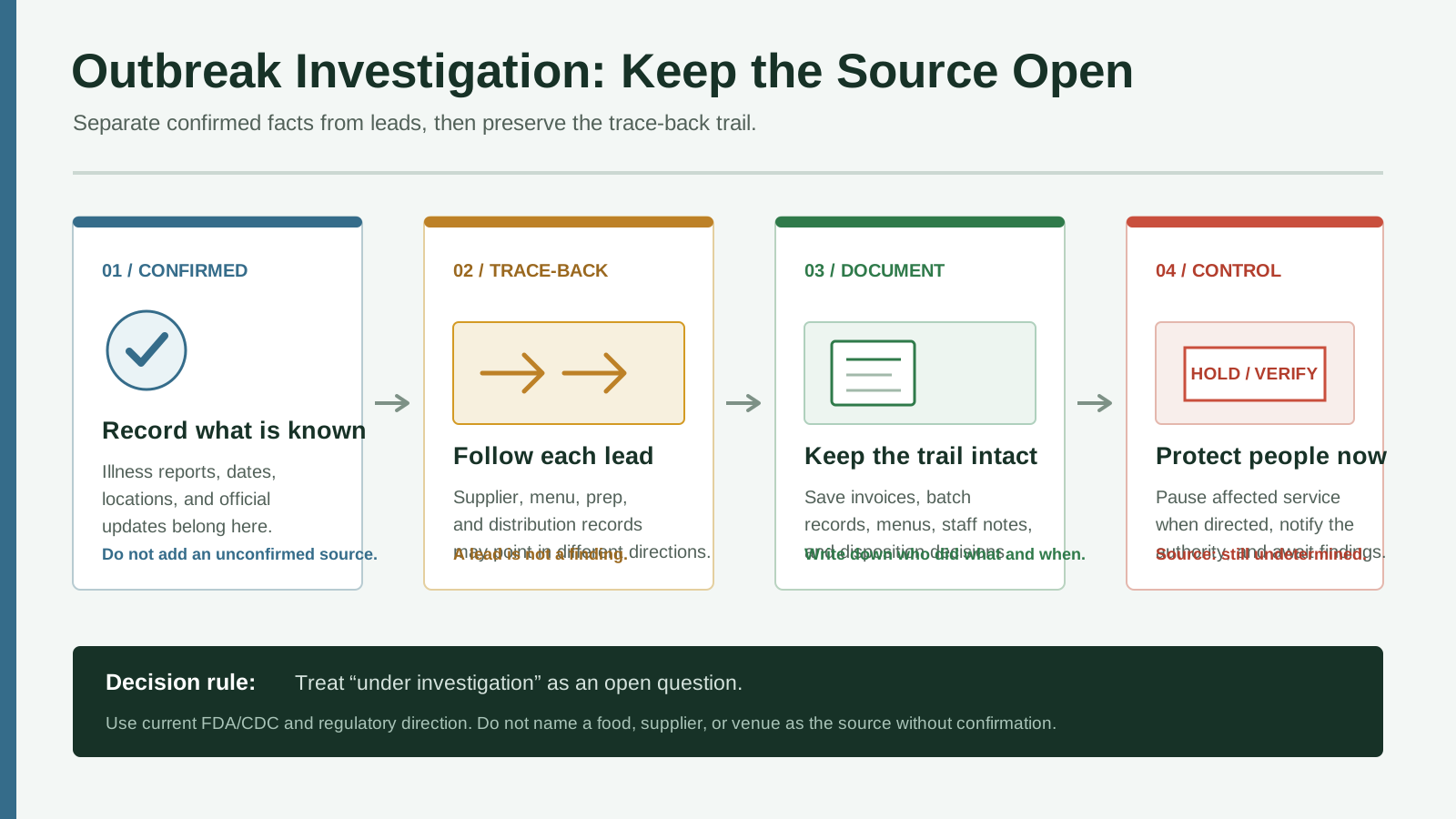
Start with the current FDA outbreak advisory and major-recall list. Stop use, sale and service of matching jalapeños and products made with them; isolate affected stock; preserve labels, invoices and lot information; and follow return or disposal instructions in the applicable recall.
If there is an immediate health hazard, follow the regulator's direction about stopping service, restricted operation, notification and reopening. An internal memo cannot override a health department order.
When a credible, documented concern involves a specific ingredient, lot, preparation step or piece of equipment, place that item or process on hold while facts are gathered. Mark it clearly, separate it from usable food, restrict access, and record who placed the hold, when, why and what evidence triggered it. Do not discard everything before speaking with the regulator if the food may be needed for traceback or testing.
Do not sample or test food on your own and treat a negative result as clearance. Sampling plans, chain of custody, laboratory interpretation and release decisions belong with the responsible authority and qualified parties. If the concern is a preparation step, pause that step and protect ready-to-eat food from contact with implicated equipment or surfaces.
- Ask what triggered the response and whether a regulator named a product, lot, process or facility.
- Pause the affected ingredient or process, mark the hold, separate it from usable food, and record who, when, why and what evidence triggered the hold.
- Protect ready-to-eat food from implicated equipment or surfaces; do not sample food yourself or treat a negative result as clearance.
- Contact the responsible authority and follow its sampling, chain-of-custody, disposition and reopening instructions.
Build a traceback packet while memories are fresh
Create one incident folder or log. Record product name, brand, supplier, invoice or purchase order, lot/code, use-by date, receiving date, quantities received/used/remaining, menu items or batches, preparation and service dates, transfers, temperatures, corrective actions, employee assignments, complaints, label photos, and the names, times and instructions from the health department, supplier or regulator.
This is not a claim that the operation caused an illness. It lets an investigator answer what came in, where it went, who handled it and what controls were in place. Limit access to unnecessary medical details and provide requested information through the designated contact.
21 CFR Part 117 is a federal manufacturing, processing, packing and holding framework. It does not automatically replace the state or local retail Food Code for a restaurant or school kitchen. Verify the controlling jurisdiction before presenting it as a restaurant requirement.
Keep photos of labels and cases before they are moved or discarded. Record quantities received, used, remaining and transferred, as well as preparation dates, service locations and any distribution to another site. Record customer complaints through the operation's privacy process, and preserve the time and wording of communications rather than rewriting them after the fact.
A useful packet is a factual timeline, not an accusation. It should make clear which facts came from FDA, which came from the operation's own records, and which are still unknown. That distinction protects both the public and the investigation.
Employee health and customer communication
CDC lists diarrhea, which can be bloody, fever, stomach cramps and vomiting as Salmonella symptoms, with usual onset 6 hours to 6 days after exposure. These are educational facts, not a diagnosis. A manager should not tell an employee that symptoms prove Salmonella or prove that the employee caused an outbreak.
Use employee-health rules that apply in the jurisdiction and the operation's approved policy. Ask the employee to report through the designated route. Exclude or restrict a symptomatic food employee when required by the applicable code, authority or written policy, and obtain regulator or healthcare guidance for return-to-work questions. Do not invent a universal 48-hour rule for every illness and jurisdiction.
If a regulator or supplier issues a notice, reproduce confirmed product identifiers and instructions accurately. If the operation is still investigating, say only that it is reviewing a potential concern, has paused the specified item or process, is cooperating with the authority, and will update customers when verified information is available. Do not say the operation found the source or that food is safe unless the responsible authority made or authorized that conclusion.
The operation should separate an employee's report of symptoms from a manager's operational decision. Document the restriction, exclusion, notification or follow-up required by the adopted code and policy, but do not circulate unnecessary medical details. If a regulator asks for information, provide it through the designated contact rather than asking front-line staff to interpret the investigation.
For customers, a careful notice can identify the specified item or process that was paused, state that the business is cooperating with the local health department, and promise updates only when verified information is available. Avoid language that invites customers to infer a source from a general menu category.
Verification and revision record
Official source update: FDA and CDC updated their outbreak advisories on August 21, 2026. Food Safety Prep rechecked the FDA advisory, CDC advisory and FDA major-recall register on August 25, 2026.
Revision: the August 2 page said the product was not yet identified and listed 212 cases. This version replaces that stale snapshot with recalled Sinaloa jalapeños distributed by Coast Citrus, 431 illnesses, 57 hospitalizations, zero deaths and 32 states, plus the current consumer and business actions. FDA's investigation remains ongoing, so recheck the official pages before acting.
For background review, see the site's Food Safety Answers page and the 2026 ServSafe Manager practice test. These links provide general study context and do not replace the current FDA investigation page.
Review food safety answers and the ServSafe Manager practice test for related concepts.
Educational disclaimer
This article is educational information for food-safety study and operational planning. It is not medical, legal or regulatory advice and does not authorize a closure, release, disposal or reopening decision. Follow the current recall, supplier and responsible authority instructions.