Reviewed 2026-07-24; official references are listed below.
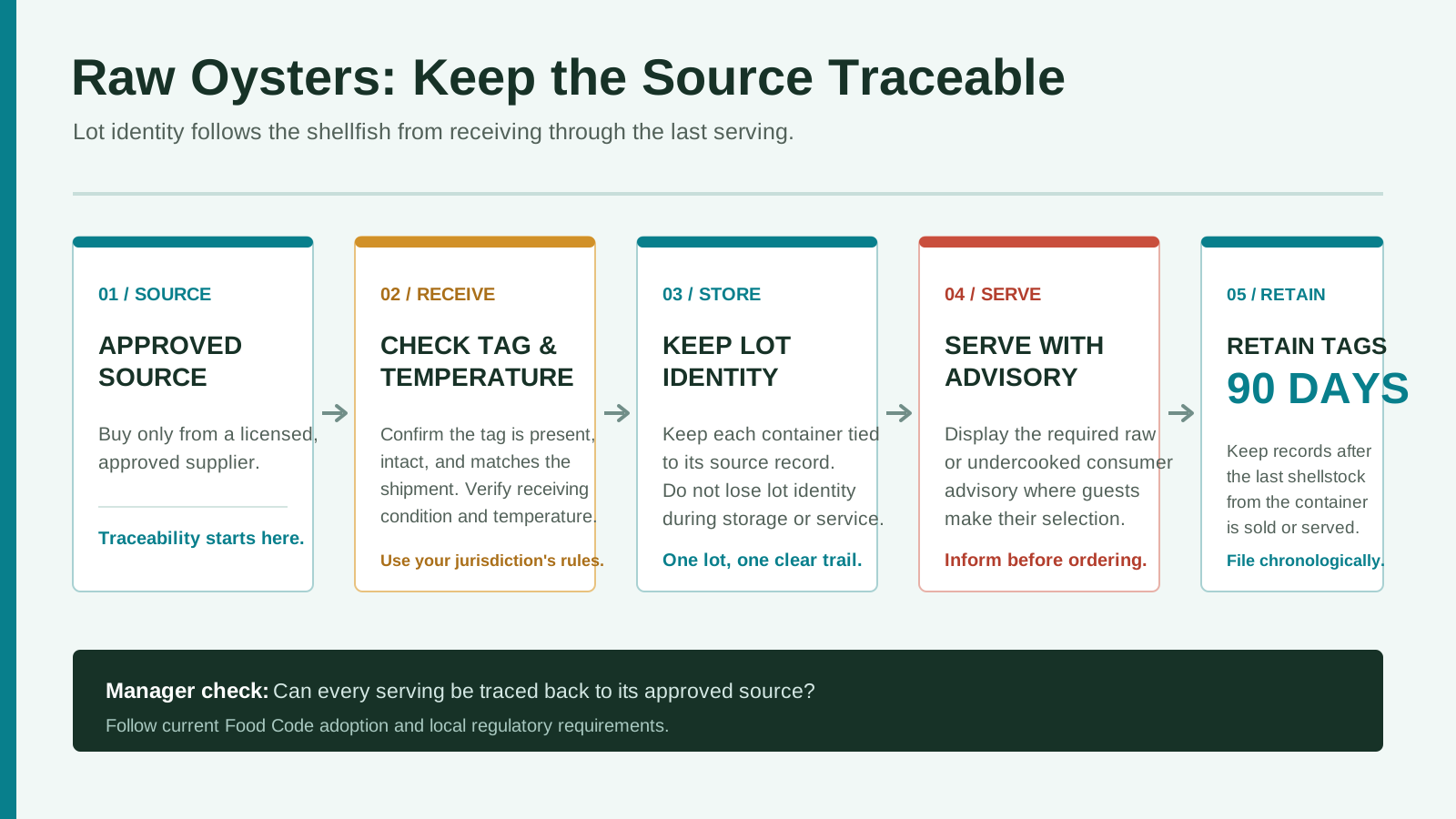
Direct answer
Verify the supplier, source record, temperature, shell condition, harvest information, and traceability before accepting raw oysters. Reject unacceptable deliveries, keep lots identified during storage and service, and stop service when inventory matches an official alert.
Vibrio risk exists year-round, and appearance, smell, or taste cannot prove that an oyster is safe. Consumer advisories communicate risk but do not replace approved sourcing, temperature control, traceback records, alert response, or local restrictions.
This guide is for U.S. food protection manager learners, persons in charge, and restaurant managers. It is educational, not personal medical advice, legal advice, or regulatory approval.
Training example versus operating rule
The 2024 ServSafe Person in Charge Leader's Guide for Ohio teaches live shellstock at 45°F, or 7°C, air temperature or lower, with internal temperature no greater than 50°F, or 10°C, followed by cooling to 41°F, or 5°C, within four hours. Its shucked-shellfish example uses 45°F to 41°F within four hours.
That Ohio PIC lesson is not a nationwide ServSafe Manager exam rule. Check the current official materials for the course and exam version being used.
In operations, follow the regulatory authority. The FDA Food Code is a model rather than law in every jurisdiction. It normally sets 41°F for refrigerated TCS food but allows another temperature specified in distribution law, followed by cooling to 41°F within four hours. Confirm the rule adopted locally.
Why raw oysters need special control
Vibrio bacteria naturally live in coastal waters and can concentrate in filter-feeding oysters. Eating raw or undercooked shellfish, especially oysters, is a common exposure. Counts are often higher in warmer months, but infections occur throughout the year.
Harmful germs do not reliably change an oyster's appearance, smell, or taste. Hot sauce, lemon juice, and alcohol do not kill Vibrio. Proper cooking does, but a cooking claim cannot release product covered by an alert or correct an unapproved source.
Anyone can be infected. CDC lists higher risk for people with liver disease, cancer, diabetes, HIV, thalassemia, immune-suppressing therapy, stomach-acid-reducing medicine, or recent stomach surgery. Raw seafood and open-wound exposure to coastal water or raw seafood also increase risk. A healthcare professional should provide personal guidance.
Receiving decision: approved source
Accept shellfish only from a supplier that complies with applicable law and National Shellfish Sanitation Program requirements. Interstate product should come from a dealer on the Interstate Certified Shellfish Shippers List.
Reject or hold a shipment that cannot be tied to an approved source. FDA Food Code section 3-701.11 requires food from an unapproved source to be discarded. Follow the local authority's process when identity or approval is uncertain.
Receiving decision: identification and temperature
A legible tag or qualifying label should identify the dealer name and address, certification number, harvest location, harvest date, shellfish type, and quantity. Do not accept an untagged or materially incomplete lot as ordinary inventory. Use the local hold, rejection, or disposition process.
Record temperatures and apply the law adopted in the jurisdiction. The Ohio PIC numbers above are a training example, not a universal receiving limit. Reject a delivery outside the applicable limit or showing temperature abuse; later chilling does not cure unacceptable receipt.
Receiving decision: shell condition and alerts
Shellstock should be reasonably free of mud, dead animals, and broken shells. Reject excessive dead or broken shellstock, and discard dead shellstock with badly broken shells according to the applicable procedure.
For an official alert, match the dealer, certification number, harvest area, harvest dates, and distribution information. Stop sale or service, segregate matching product, preserve records, and follow the alert's disposition instructions.
Shellstock tags and the 90-day rule
Keep shellstock identification attached to the original container until it is empty. Before ordering, do not commingle containers with different certification numbers, harvest dates, or growing areas. Preserve the source identity when shellfish leave the tagged container.
Record the date the last oyster from the container is sold or served. Retain the source record chronologically for 90 calendar days from that date, not from the delivery date. Records should be quickly retrievable during an investigation or recall.
FDA's identification update allows a qualifying invoice to support traceback only when the invoice contains the required source information. A generic purchase receipt is not a substitute for the complete identification record.
Consumer advisory
Under FDA Food Code section 3-603.11, raw oysters require both disclosure and a reminder. Disclosure identifies the item as raw, such as oysters on the half shell described as raw oysters, or marks the item with an asterisk tied to a statement that it is served raw or contains raw ingredients.
The reminder links the item by asterisk to a complete warning option allowed by the adopted code. The model wording says that consuming raw or undercooked meats, poultry, seafood, shellfish, or eggs may increase the risk of foodborne illness. Do not shorten that model wording to a shellfish-only sentence unless the adopted local code allows it.
A warning is not permission to ignore sourcing, temperature, traceability, or local restrictions. Under the FDA model, a facility serving a highly susceptible population may not offer raw molluscan shellfish in ready-to-eat form. Local wording, placement, and service restrictions may be more specific.
PIC checklist before ordering and at receiving
Build the control before the delivery arrives. Assign a person to monitor official alerts, require complete lot identification and temperature records, and keep the current certified-shipper information available for verification.
- Use an approved dealer and verify interstate dealers against the current Interstate Certified Shellfish Shippers List.
- Match the supplier, certification number, harvest area and date, species, quantity, lot record, and applicable temperature at receiving.
- Inspect for dead shellstock, broken shells, physical damage, incomplete identification, and evidence of temperature abuse.
- Reject or isolate questionable product and follow the local process. Never use smell as a pathogen test.
PIC checklist during storage and service
Keep each lot in its tagged container until empty, maintain cold holding, complete any cooling allowed by the adopted rule, and prevent contamination or prohibited commingling. Verify both consumer-advisory elements before raw oysters are offered.
When the container is empty, record the last sale or service date and file the identification chronologically for 90 days. The source record must remain usable, not merely exist somewhere in an unsorted box.
How to respond to a shellfish alert
Stop sale and service, isolate inventory, preserve tags and invoices, and compare every identifying field in the notice. Notify the supplier, company food-safety lead, and regulatory authority as required, then follow the stated return, destruction, cleaning, and customer-communication instructions.
The March 9, 2026 Drayton Harbor alert concerned potential norovirus, not Vibrio. It identified Drayton Harbor Oyster Company oysters under WA-1723-SS and Lummi Indian Business Council Manila clams under WA-0098-SS, harvested February 13 through March 3, 2026. Oysters went to Washington; clams went to Arizona, California, Florida, Georgia, Illinois, Nevada, New York, Oregon, Washington, and possibly elsewhere.
FDA told restaurants and retailers not to serve or sell matching product and to discard it or contact the distributor for destruction. Operators that processed or packaged it were directed to address contacted cutting surfaces and utensils, while retailers that sold bulk product were directed to clean and sanitize holding containers. Always use the live alert for an active decision.